Djela #16: Djetinjstvo

Djela #16: Djetinjstvo

Maksim Gorki

The first part of Gorky's autobiographical trilogy, published in 1913, depicts the author's difficult upbringing under the Tsarist regime. The book follows Alexei Peshkov (real name Maxim Gorky) from his early childhood to his teenage years.

After his father's death, his mother leaves him with his grandparents, where he experiences physical and emotional abuse. His grandfather is strict and cruel, while the only warmth and understanding he receives is from his grandmother, a woman filled with stories and folk wisdom. In this harsh environment, Alexei faces injustice, poverty, and violence, but at the same time develops strength and a desire to learn.

Throughout the novel, Gorky describes 19th-century Russian society, with an emphasis on class differences and the position of ordinary people. The work is rich in rich descriptions and vivid characters, depicting the cruelty and brutality of the world in which he grew up.

"Childhood" is a powerfully emotional work that explores broader social and political issues through a personal story, announcing Gorky's later social engagement.

Original title
Детство
Translation
Marko Vidojković
Editor
Ljerka Markić
Graphics design
E. Stepančić
Dimensions
19.5 x 14.5 cm
Pages
209
Publisher
Kultura, Zagreb, 1948.
 
Latin alphabet. Hardcover.
Language: Croatian.

One copy is available

Condition:Used, excellent condition
 

Are you interested in another book? You can search the offer using our search engine or browse books by category.

You may also be interested in these titles

Moji univerziteti

Moji univerziteti

Maksim Gorki
Rad, 1959.
Serbian. Latin alphabet. Paperback.
0.99
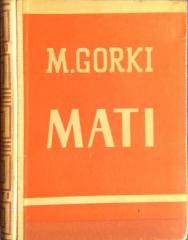
Mati

Mati

Maksim Gorki

Maxim Gorky's novel "Mother" was published in 1906 and is one of the key works of Russian social realism. The work depicts the awakening of the working class in Russia through characters and events that emphasize social injustices and the need for revolut

Glas rada, 1950.
Croatian. Latin alphabet. Hardcover with dust jacket.
4.36
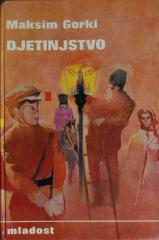
Djetinjstvo

Djetinjstvo

Maksim Gorki
Mladost, 1982.
Croatian. Latin alphabet. Hardcover.
2.99 - 3.98
Deobe 1-3

Deobe 1-3

Dobrica Ćosić

This work, awarded the NIN Prize for that year, is considered one of the most significant in Serbian literature after World War II.

Prosveta, 1961.
Serbian. Cyrillic alphabet. Hardcover with dust jacket.
The book consists of 3 volumes
11.42
Proces

Proces

Franz Kafka

Kafka wrote The Process between 1914 and 1915, published posthumously in 1925. The novel is unfinished but with an added final chapter by Max Brod. Edition with a foreword by B. Živojinović and an afterword by Walter Killi.

BIGZ, 1990.
Serbian. Latin alphabet. Paperback.
4.26
Stotina godina (antikronika)

Stotina godina (antikronika)

Dario Harjaček

The novel One Hundred Years by Dario Harjaček provides a panoramic view of Trešnjevka and its inhabitants through a century of changes, ideologies, and human destinies – a mosaic of Zagreb in which life, art, and history intertwine.

Oceanmore, 2025.
Croatian. Latin alphabet. Paperback.
13.42