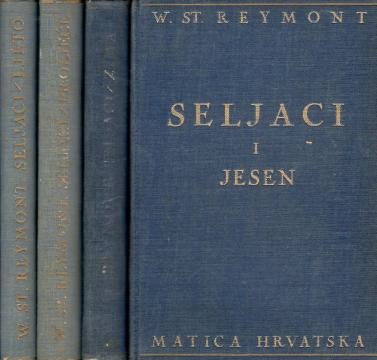
Seljaci I-IV

Seljaci I-IV

A masterpiece of Polish literature that earned the author the Nobel Prize for Literature in 1924. The work is structured in four parts, each named after a season, emphasizing the cyclical connection of human life with nature.

The story takes place in the village of Lipce at the end of the 19th century, and the central character is Maciej Boryna, the richest peasant in the village. His decision to marry the young and beautiful Jagna causes a series of conflicts, especially with his son Antko, who is also in love with Jagna. This love and family drama reflects deeper social tensions within the community.

Reymont depicts in detail the daily life of peasants, their customs, work habits and social relations. Through a naturalistic and realistic style, the author depicts the complexity of rural life, including conflicts over land, which symbolize the struggle for survival and identity.

The Peasants is more than a chronicle of rural life; it is an epic that explores universal themes such as love, greed, generational conflict and man's relationship with nature. The novel remains relevant today, providing insight into human nature and social dynamics that transcend time and space.

Original title
Chłopi

Set content


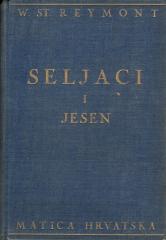
Seljaci I: Jesen

1. Seljaci I: Jesen

Władysław Stanisław Reymont

The first part of an epic tetralogy about the life of a Polish rural community in the village of Lipce. The novel depicts the rhythm of rural work, everyday life, intrigues, conflicts over land and power, and the marriage of the old, wealthy peasant Macie

Pages: 287
Condition:Used, very good condition
Damages or inconvenience notice:
  • Cracked back
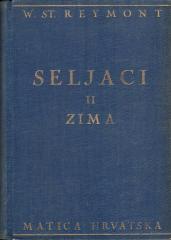
Seljaci II: Zima

2. Seljaci II: Zima

Władysław Stanisław Reymont

The second part of the epic tetralogy Peasants. The novel depicts the difficult winter life in the village of Lipce, deepens the conflicts within Boryna's family, the passionate relationship between Antko and Jagna, and the growing tensions in the village
Pages: 308
Condition:Used, excellent condition
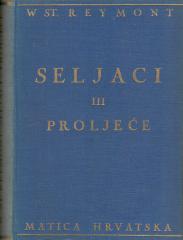
Seljaci III: Proljeće

3. Seljaci III: Proljeće

Władysław Stanisław Reymont

The third part of the epic tetralogy The Peasants. Spring brings the awakening of nature, but also new conflicts in the village of Lipce: the culmination of a love triangle, family drama and social tensions. The continuation of Nobel's epic of Polish peas
Pages: 378
Condition:Used, excellent condition
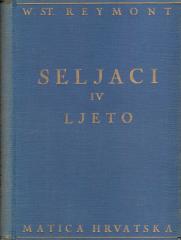
Seljaci IV: Ljeto

4. Seljaci IV: Ljeto

Władysław Stanisław Reymont

Peasants IV: Summer is the final and most powerful part of the epic tetralogy Peasants. The culmination of the conflict in the village of Lipce during the hot summer and harvest, the drama surrounding Jagna, the death of Maciej Boryna and the final closin

Pages: 317
Condition:Used, excellent condition

One set is available


Are you interested in another book? You can search the offer using our search engine or browse books by category.

You may also be interested in these titles

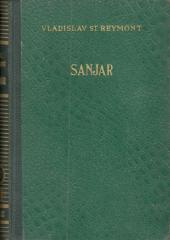
Sanjar

Sanjar

Wladyslaw St. Reymont

The novel The Dreamer by Polish Nobel laureate Władysław Stanisław Reymont, published in Croatian in 1944, is an introspective and philosophically tinged work that differs from his more famous realistic novels such as The Peasant.

Suvremena biblioteka, 1944.
Croatian. Latin alphabet. Hardcover.
6.22
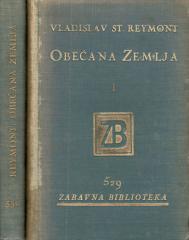
Obećana zemlja 1-2

Obećana zemlja 1-2

Władysław Stanisław Reymont

The novel The Promised Land, published in 1899, is one of the most significant works by Polish Nobel Prize winner Władysław Reymont. Set in the industrial city of Łódź at the end of the 19th century, the novel depicts rapid industrialization and its conse

Zabavna biblioteka - Naklada tiskare Narodnih novina, 1932.
Croatian. Latin alphabet. Hardcover.
The book consists of two volumes
13.24
Devet

Devet

Andrzej Stasiuk

“Nine” (1999) by Andrzej Stasiuk, one of the most important contemporary Polish writers, is an unusual thriller that follows a small shopkeeper, Paweł, a modern-day Ulysses, whose life changes abruptly when debt collectors rob him and destroy his apartmen

Fraktura, 2003.
Croatian. Latin alphabet. Paperback.
5.74
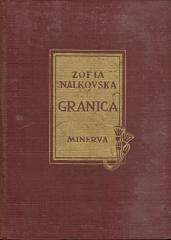
Granica

Granica

Zofia Nałkowska

Through the fate of the ambitious Zenon Ziembiewicz, the novel Granica depicts the transgression of moral, social and human boundaries – careerism, class differences and the price of compromise in interwar Polish society.

Minerva, 1956.
Serbian. Latin alphabet. Hardcover.
5.42
Sablasti u Breslauu

Sablasti u Breslauu

Marek Krajewski

Ghosts of Breslau is the third installment in the celebrated series about Inspector Eberhard Mock, thanks to which Polish writer and classical philologist Marek Krajewski has been recognized worldwide as one of the canonical, full-blooded writers of histo

Fraktura, 2010.
Croatian. Latin alphabet. Paperback.
12.58
Start Edmunda Sulime

Start Edmunda Sulime

Zygmunt Nowakowski

The novel follows the young Edmund Sulima, who, in interwar Poland full of ideals, enters the world of theater and art, facing the difficulties of theatrical life, social intrigues, loves, and disappointments.

Savremena biblioteka, 1939.
Croatian. Latin alphabet. Hardcover with dust jacket.
9.56