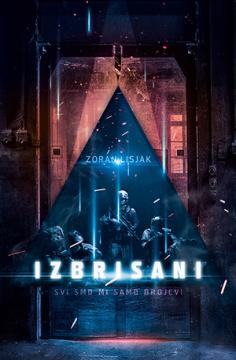
Izbrisani

Izbrisani

Zoran Lisjak

The novel "Izbrisani" was edited by the literary critic Božidar Alajbegović and it was the last novel that Alajbegović signed as an editor.

A retired veteran of the Homeland War, shaken by the suicide of a friend and comrade and disappointed by the injustices and enrichment of individuals reported by the media, plans with eleven loyal men a military siege and bombing of an abandoned military facility, while blackmailing the rulers. He is looking for investigations into war profiteering and trials for secret accounts abroad. He presents his demands to the authorities and gives them a deadline to initiate the requested measures - if he does not receive guarantees that they will start investigations within 72 hours, he will activate explosives in the barracks and thereby commit collective suicide. Outside the occupied barracks, negotiations continue in which veterans are tried to be dissuaded from their intentions, while in the barracks the emotional dramas of the individuals involved take place. Life decisions are relived, war dangers from which they barely escaped, relationships with families and actions towards loved ones are re-examined, until the tense finale in which the action and personal drama culminates.

Lisjak's style is communicative and clear, and its courage allows the reader to follow the action from the perspective of an emotional and brave warrior who participates in the war with all his skills and dexterity, but also responsibly sympathizes with his loyal comrades. Commander Damir Palmar worries about whether his men have said goodbye to their loved ones and knows what kind of lives they had and what they wanted. With his approach, Lisjak allows us to see the war from the perspective of an emotional fighter who does not forget the value of human life in war actions and fights against war.

Dimensions
20 x 12 cm
Pages
191
Publisher
Vlastita naklada, Čakovec, 2021.
 
Distribution: 300 copies
 
Latin alphabet. Paperback.
Language: Croatian.
ISBN
978-9-53820-924-6

No copies available

The last copy was sold recently.
 

Are you interested in another book? You can search the offer using our search engine or browse books by category.

You may also be interested in these titles

Magična ljubavna kutijica

Magična ljubavna kutijica

Santa Montefiore

The Magic Love Box (2002) follows the life story of Federica Campione, which begins in Vina del Mar, Chile, in the summer of 1982. Montefiore creates an epic story of growth, where the magic is not only in the box, but in the courage to let go of the past

Mozaik knjiga, 2006.
Croatian. Latin alphabet. Hardcover.
7.34
Knjiga moga oca

Knjiga moga oca

Ethem Mandić

This is a biography about my father made up of memories and mere imagination. History does not exist, and neither do facts. The past is unknown.

OKF d.o.o, 2016.
Croatian. Latin alphabet. Paperback.
10.64
Pustolovine Toma Sawyera

Pustolovine Toma Sawyera

Mark Twain

The Adventures of Tom Sawyer is the first truly realistic children's novel, not only in American but also in world children's literature. Twain's most famous work and a favorite children's book in which the writer described his boyhood experiences.

Nakladni zavod Hrvatske, 1947.
Croatian. Latin alphabet. Hardcover.
16.32
Zagrepčanka

Zagrepčanka

Branislav Glumac

Branislav Glumac published a novel without periods or commas in 1974, as the relentless stream of thought of a young rebel. Published in socialist Yugoslavia, the work caused a scandal with its openness and became a classic about generational rebellion.

IROS, 1986.
Croatian. Latin alphabet. Hardcover.
8.24
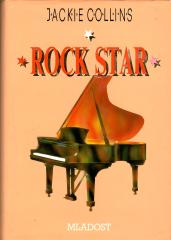
Rock Star

Rock Star

Jackie Collins

With the rhythm of rock'n'roll, Jackie Collins takes the reader behind the scenes of the world of fame and fortune, where three music stars — Kruger, Rafaella and Bobby — experience turbulent passions, betrayals and the struggle for success, while ambitio

Mladost, 1990.
Croatian. Latin alphabet. Hardcover with dust jacket.
9.34
Deobe 1-3

Deobe 1-3

Dobrica Ćosić

This work, awarded the NIN Prize for that year, is considered one of the most significant in Serbian literature after World War II.

Prosveta, 1961.
Serbian. Cyrillic alphabet. Hardcover with dust jacket.
The book consists of 3 volumes
11.42