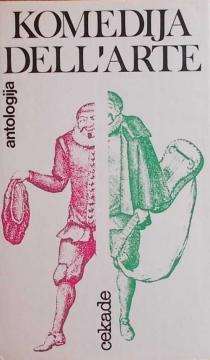
Komedija dell'Arte

Komedija dell'Arte

Višnja Machiedo

Commedia dell'Arte is a significant theatrical art form that developed in Italy in the mid-16th century and spread rapidly throughout Europe, remaining popular until the late 18th century.

Dieser Stil ist bekannt für seine improvisierten Darbietungen, bei denen die Schauspieler stereotype Charaktere wie Harlekin, Kapitän oder Pulcinello und improvisierte Dialoge auf der Bühne verwendeten, wobei sie oft Masken und akzentuierte Dialekte oder Fremdsprachen verwendeten, um das Publikum weiter zu unterhalten.

Commedia dell'Arte war als „Komödie von Kennern“ oder „Komödie des Handwerks“ bekannt, da das Wort „arte“ damals Kunstfertigkeit oder Handwerk bedeutete. Schauspieler spezialisierten sich auf bestimmte Charaktere und arrangierten gemeinsam Witze, um das Publikum zu unterhalten, und typische Charaktere der klassischen Komödie des 16. angerufen Masken.

Obwohl die Stücke improvisiert waren, gab es interessanterweise eine grundlegende Handlung oder ein Drehbuch, das den Schauspielern als Leitfaden diente. Diese Theaterform hinterließ tiefe Spuren in der Weltkultur und beeinflusste die Entwicklung der Pantomime, des Puppentheaters und später auch von Filmschauspielern wie Charlie Chaplin.

Translation
Višnja Machiedo
Editor
Slobodan Šnajder
Graphics design
Mihajlo Arsovski
Dimensions
22 x 13.5 cm
Pages
197
Publisher
Centar za kulturnu djelatnost (Cekade), Zagreb, 1987.
 
Latin alphabet. Hardcover with dust jacket.
Language: Croatian.
ISBN
8-67-091043-8

No copies available

The last copy was sold recently.
 

Are you interested in another book? You can search the offer using our search engine or browse books by category.

You may also be interested in these titles

Osamnaest izazova svezak drugi

Osamnaest izazova svezak drugi

Višnja Machiedo
Ceres, 1996.
Croatian. Latin alphabet. Paperback.
5.50
Fak-ju!: Antologija

Fak-ju!: Antologija

A collection of short stories by contemporary authors from Croatia and the ex-YU area. A provocative, ironic, cynical look at the transition of the 90s/2000s: war, nationalism, crime, sex, drugs, rock'n'roll and social decay. "Fuck you" to mainstream and

Rende, 2001.
Croatian. Latin alphabet. Paperback.
9.42
Pesme: izbor

Pesme: izbor

Vasko Popa

The collection represents an anthological selection of poems by one of the most important Serbian poets of the 20th century. The selection and afterword of "Magic Forge" is signed by Muharem Pervić, who deepens the understanding of Popa's creativity.

Rad, 1985.
Serbian. Latin alphabet. Paperback.
6.42
Miroslav Antić: Izabrana dela 1-6

Miroslav Antić: Izabrana dela 1-6

Miroslav Antić

This edition presents a selection of key collections of poems by Miroslav "Mike" Antic (1932–1986). It is a luxurious, hardbound collection in six volumes, with illustrations by Mica Mihajlović, intended for a wider audience and collectors.

Dnevnik, 1982.
Serbian. Latin alphabet. Hardcover with dust jacket.
The book consists of 6 volumes
96.42
Felix Austria: antologija austrijske kratke priče

Felix Austria: antologija austrijske kratke priče

Milka Car

The book presents a selection of short stories by about 15 Austrian authors, trying to show the development of Austrian short prose - from realism and naturalism through modernity and expressionism to post-war and postmodernist literature.

Naklada MD, 2003.
Croatian. Latin alphabet. Paperback.
12.389.90
Antologija poljske pripovijetke XX stoljeća

Antologija poljske pripovijetke XX stoljeća

Zdravko Malić

The anthology, edited and translated by Zdravko Malić, a leading Croatian Polish scholar and founder of the Polish Language Department at the Faculty of Fine Arts in Zagreb, represents a key selection of Polish short fiction from the 20th century.

Veselin Masleša, 1984.
Croatian. Latin alphabet. Hardcover with dust jacket.
7.24