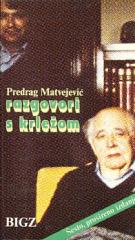
Jugoslavenstvo danas

Jugoslavenstvo danas

Predrag Matvejević

Yugoslavism Today (1982) examines the concept of Yugoslavism in the context of the political, cultural, and social conditions of the SFR Yugoslavia, in the period after Tito's death. The work explores the historical roots of the Yugoslav idea and the chal

Matvejević begins by examining the history of Yugoslavism, from the Illyrian movement and the ideas of Josip Juraj Strossmayer to the creation of Yugoslavia after World War I. He analyzes how Yugoslavism, as an idea of unifying the South Slavic peoples, evolved through political projects, but also encountered resistance from nationalisms. In the context of the 1980s, Matvejević critically assesses the state of the Yugoslav federation, highlighting the tensions between centralism and republican interests, as well as between the collective idea and individual identities.

The author looks at the role of culture, language, and literature in shaping Yugoslavism, but also at the bureaucratic and ideological deformations that threatened that idea. With lucidity and erudition, Matvejević warns of the dangers of growing nationalist tendencies and questions whether Yugoslavism can survive without coercion. His style is analytical, but imbued with melancholy due to the uncertain future of the common state.

Yugoslavism is today appreciated for its intellectual depth and insightful criticism. The work remains relevant as a testimony to the complexity of the Yugoslav idea and its challenges on the eve of the state's disintegration.

Dimensions
20 x 14 cm
Pages
244
Publisher
Globus, Zagreb, 1982.
 
Latin alphabet. Hardcover with dust jacket.
Language: Croatian.

One copy is available

Condition:Used, excellent condition
 

Are you interested in another book? You can search the offer using our search engine or browse books by category.

You may also be interested in these titles

Književni leksikon - strani pisci

Književni leksikon - strani pisci

Željko Bujas, Frano Čale, Aleksandar Flaker, Breda Kapetanić, Radoslav Katičić, Petar Kepeski, Je...
Školska knjiga, 1961.
Croatian. Latin alphabet. Hardcover.
3.89
Republika 1962/1

Republika 1962/1

Gustav Krklec, Petar Šegedin, Miroslav Vaupotić, Dobriša Cesarić, Ivan Katušić, Marin Franičević,...
Zora, 1962.
Croatian. Latin alphabet. Paperback.
6.82
Titostalgija

Titostalgija

Mitja Velikonja

The author explores why Tito remains a popular symbol of stability, social security and independence, despite critical views of his regime. The book maps the cultural, political and everyday manifestations of "Titostalgia".

Biblioteka XX vek, 2010.
Serbian. Latin alphabet. Paperback.
7.36
Zaraćeno poraće: Konfliktni i konkurentski narativi o stradanju i iseljavanju Talijana Istre

Zaraćeno poraće: Konfliktni i konkurentski narativi o stradanju i iseljavanju Talijana Istre

Franko Dota

The book analyzes how conflicting historical narratives about the suffering and mass emigration of Italians from Istria and Rijeka developed in Croatia and Italy after World War II (1943–1956), debunking myths and encouraging an empathetic approach to the

Srednja Europa, 2010.
Croatian. Latin alphabet. Paperback.
11.328.49
Hrvatska politička povijest od Khuena do Rapalla

Hrvatska politička povijest od Khuena do Rapalla

Angjelo Gjurski

The work depicts the political development of Croatia from the period of Khuen-Héderváry's rule to the Treaty of Rapallo, analyzing key conflicts, national processes, and relations within the Monarchy and the Kingdom of SHS.

Hrvatska politička biblioteka, 1938.
Croatian. Latin alphabet. Hardcover.
8.326.24
Sam protiv njih

Sam protiv njih

Roman Leljak

A non-fiction work by a Slovenian investigator of the UDB archives. The author, a former KOS employee, left the army after learning about the crimes of the Yugoslav army during the war and the post-war period, and dedicated himself to exposing the secret

Vlastita naklada, 1990.
Croatian. Latin alphabet. Paperback.
16.42