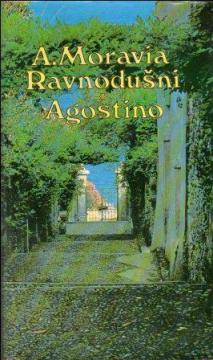
Ravnodušni / Agostino

Indifferent (1929), Moravia's first and most famous novel, a masterpiece of Italian modernism, the novel that brought him fame and recognition. Agostino (1944) is one of Moravia's most lyrical prose works, a short but powerful novel about coming of age.
“Indifferent”: Rome, late 1920s. The Ardengo family – widow Mariagrazia, son Michele (24) and daughter Carla (20) – live under a false bourgeois facade while their house literally collapses due to debts. Leo Merumeci, the mother’s rich and cynical lover, offers “salvation”: money for a villa in exchange for Carla’s body. Michele, an intellectual full of contempt for the world, realizes that he himself is indifferent – he hates Leo, but cannot act. In 48 hours everything collapses: Carla agrees to a compromise, Michele misses the opportunity for revenge, the mother remains blind. The novel is a cold, surgically precise analysis of moral decay, hypocrisy and powerlessness in the face of evil. A work that shocked fascist Italy because it showed that indifference is not innocence, but complicity.
“Agostino”: Thirteen-year-old Agostino spends his summers with his widowed mother on the seaside. The ordinary relationship between mother and son is shattered when the boy discovers that his mother has a lover and that she is a woman in front of other men. He begins to be obsessed with sexuality, class differences and his own powerlessness. He joins a gang of poor beach boys who introduce him to a world of rudeness, prostitution and ridicule. In an attempt to “become a man”, Agostino goes through humiliations and realizes that adulthood is not heroic, but a painful and dirty thing. The mother remains an unattainable object, and the boy returns home wounded and a stranger in his own body.
Both novels explore the loss of innocence – social in “The Indifferent”, personal in “Agostino” – and remain the culmination of Moravia’s obsession with alienation, sex and the hypocrisy of the bourgeoisie.
One copy is available