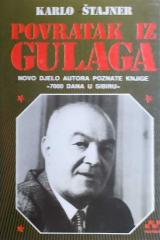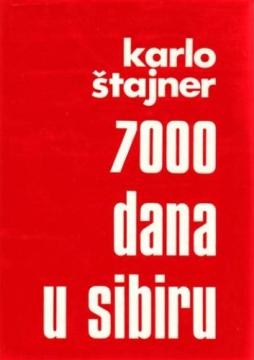
7000 dana u Sibiru

7000 dana u Sibiru

Karlo Štajner

Steiner spent twenty years in the most terrible camps in the expanses of Siberia, and in this book he presents the testimonies of the terrible crimes committed by Stalin in the name of communism.

Karlo Steiner, a hardened Austrian and Yugoslav communist (born in Vienna in 1902), arrived in the USSR in 1932. In the fall of 1936, during the great "purges", he was arrested on false charges, and for the next twenty years, completely innocent, he lived in the camps and horrors of Siberia. After returning to Yugoslavia, Steiner described what he experienced in those twenty terrible years...

Dimensions
24 x 17 cm
Pages
474
Publisher
Globus, Zagreb, 1973.
 
Latin alphabet. Hardcover with dust jacket.
Language: Croatian.

No copies available

The last copy was sold recently.


Are you interested in another book? You can search the offer using our search engine or browse books by category.

You may also be interested in these titles

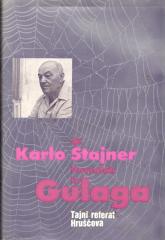
Povratak iz Gulaga: Tajni referat Hruščova

Povratak iz Gulaga: Tajni referat Hruščova

Karlo Štajner

A sequel to his memoir 7000 Days in Siberia, in which he describes his twenty-year imprisonment in Soviet gulags. The book delves into his experiences in the camps, providing additional insights into Steiner's life and reflections on communist ideals.

Globus, 1986.
Croatian. Latin alphabet. Hardcover with dust jacket.
10.76 - 11.24
Historijat novih ljevica u Europi (1956-1978)

Historijat novih ljevica u Europi (1956-1978)

Massimo Teodori
Globus, 1979.
Croatian. Latin alphabet. Hardcover with dust jacket.
8.54
Ljubljana u borbi 1941–1945: Zbornik sećanja

Ljubljana u borbi 1941–1945: Zbornik sećanja

The collection brings together the memories of participants in the national liberation struggle in Ljubljana during World War II. The collection contains personal testimonies, which provide insight into the everyday life, struggle and sacrifices of the in

Vojnoizdavački zavod, 1978.
Serbian. Latin alphabet. Hardcover with dust jacket.
9.76
Komunizam i čovjek: Odnos vlasti i pojedinca u Hrvatskoj (1958.–1972.)

Komunizam i čovjek: Odnos vlasti i pojedinca u Hrvatskoj (1958.–1972.)

Josip Mihaljević

Josip Mihaljević's book analyzes the relationship between the government and the individual in communist Croatia (1958–1972), through repressive mechanisms, ideological pressures, and restrictions on personal freedom in the socialist system.

Hrvatski institut za povijest, 2016.
Croatian. Latin alphabet. Hardcover.
17.26
Radni logor Valpovo 1945.-1946.: dokumenti

Radni logor Valpovo 1945.-1946.: dokumenti

Vladimir Geiger

The Valpovo labor camp (1945–1946) was the largest camp for Volksdeutschers in Croatia after World War II. About 4,000 Germans and Austrians were interned; at least 1,074 died, mostly from hunger, disease, and exhausting labor.

Njemačka zajednica podunavskih Švaba u Hrvatskoj, 1999.
Croatian. Latin alphabet. Hardcover.
27.34
Zaraćeno poraće: Konfliktni i konkurentski narativi o stradanju i iseljavanju Talijana Istre

Zaraćeno poraće: Konfliktni i konkurentski narativi o stradanju i iseljavanju Talijana Istre

Franko Dota

The book analyzes how conflicting historical narratives about the suffering and mass emigration of Italians from Istria and Rijeka developed in Croatia and Italy after World War II (1943–1956), debunking myths and encouraging an empathetic approach to the

Srednja Europa, 2010.
Croatian. Latin alphabet. Paperback.
11.32