Knjiga o travama

Knjiga o travama

Sándor Márai

This book by the Hungarian classic Sándor Márai is like the old books about herbs that wanted to answer questions like: what should be done if someone has a heartache or has been abandoned by God with simple examples.

In this book, we find 202 maxims/miniature essays in which the author expresses his thoughts about human nature and the world around him, usually shaped as direct philosophical and moral lessons for the reader. The author himself indicates its purpose at the beginning of the book: "This is not a scientific book, but rather like those taught in elementary school. The one who wrote it does not know the absolute truth and is often wrong in the details. Because he is human. But he searches for the absolute truth and is not ashamed if he is wrong in the details. Because he is human. So this book will be like that - like the old books about herbs that wanted to answer the questions of what to do if someone's heart hurts or God has abandoned them with simple examples. And the one who knows better should say better."

The book is not about ideas and heroes, but about what is related to man. Its author wants to teach others by learning, learning from the ancients, from books, through them from the human heart, from heavenly signs. He wants to convey elementary knowledge, that is, the fundamental truths of human life. Written in 1943, Sándor Márai dedicated the work to Epictetus, his dear Marcus Aurelius, Montaigne and all the Stoics, from whom he learned about power, goodwill and living without fear.

Original title
Füves könyv
Translation
Ivana Delač, Jurica Puškar, Milka Mihaljević, Viktorija Šantić, Veronika Žagar
Editor
Gordana Farkaš-Sfeci
Illustrations
Bojan Krištofić
Dimensions
20 x 13 cm
Pages
136
Publisher
Oceanmore, Zagreb, 2016.
 
Latin alphabet. Paperback.
Language: Croatian.
ISBN
978-9-53332-046-5

No copies available

The last copy was sold recently.
 

Are you interested in another book? You can search the offer using our search engine or browse books by category.

You may also be interested in these titles

Nietzsche: Biografija njegove misli

Nietzsche: Biografija njegove misli

Rüdiger Safranski

Rüdiger Safranski, known for his works on Schopenhauer, Heidegger, and Goethe, presents an intimate "biography of thought" of Friedrich Nietzsche. The study traces the evolution of his ideas through key events, contradictions, and creative crises.

Sandorf, 2021.
Croatian. Latin alphabet. Hardcover with dust jacket.
25.62
Rajski brežuljci: Povijest moći i nemoći

Rajski brežuljci: Povijest moći i nemoći

Mineke Schipper

In her book, Mineke Schipper explores cultures throughout history to describe the complex relationship men have with the female body. Despite the symbiotic relationship between the sexes, men have always had greater power than women, and at the root of it

Durieux, 2021.
Croatian. Latin alphabet. Hardcover with dust jacket.
16.54
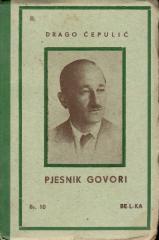
Pjesnik govori: filozofsko-estetske kozerije

Pjesnik govori: filozofsko-estetske kozerije

Drago Ćepulić

"The Poet Speaks: Philosophical-Aesthetic Riddles" by Dragutin (Drago) Ćepulić is a collection of short, thoughtful essays in which the author reflects on literature, art, philosophy, and human creativity in a witty, insightful, and unobtrusive manner.

Minerva nakladna knjižara, 1943.
Croatian. Latin alphabet. Paperback.
6.24
Filozofija kao sistem?

Filozofija kao sistem?

Branko Despot

"Philosophy as a System?" (1999) is a collection of four philosophical lectures by Croatian philosopher Branko Despot (b. 1942), known for his profound interpretations of classical German philosophy and metaphysics.

Hrvatsko filozofsko društvo, 1999.
Croatian. Latin alphabet. Paperback.
11.32
Kopernikanska mobilizacija i ptolomejsko razoružanje: Ogled iz estetike

Kopernikanska mobilizacija i ptolomejsko razoružanje: Ogled iz estetike

Peter Sloterdijk

In this provocative essay, Sloterdijk intervenes in the heated debate of the 1980s about modernism and postmodernism. A short, sharp text – essential for understanding Sloterdijk's early approach to aesthetics, media and the crisis of modernity.

Svetovi, 1988.
Serbian. Latin alphabet. Paperback with dust jacket.
8.36
Foucault

Foucault

Gilles Deleuze

Deleuze's Portrait of Foucault (1986) is not a monograph, but a creative "thinking with Foucault." It analyzes the archaeology of knowledge, introducing the concepts of archive, power, subjectification, and "fold" as crucial to Foucault's thought on knowl

Sandorf, 2023.
Croatian. Latin alphabet. Paperback.
11.86