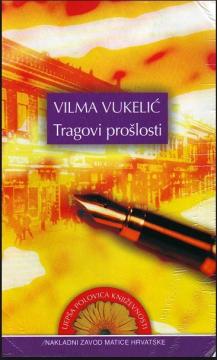
Tragovi prošlosti

Tragovi prošlosti

Vilma Vukelić

With numerous self-analyses, literaryizations and essayistic digressions, the author has reconstructed the picture of Osijek's history.

Memoirs that cover the author's youth, and are interrupted at the beginning of the twentieth century, when she got married. She follows the slow personal growth in space (the city of Osijek) and time, and she is most interested in the way in which an authentic life is incorporated into the context of an authentic city. The author follows the continuity of her own life, and she also achieves persuasiveness by ascending the genealogical tree of her family of Hungarian-Jewish origin. Sometimes he reaches for concrete traces of the time he is talking about - for example, newspaper articles, obituaries, family records, etc., and often describes personal items, clothes, dishes, paintings, hairstyles, furniture, showing this props through a subjective lens.

Translation
Vlado Obad
Editor
Julijana Matanović
Graphics design
Marina Ćorić
Dimensions
20 x 13 cm
Pages
414
Publisher
Nakladni zavod Matice hrvatske, Zagreb, 2003.
 
Latin alphabet. Paperback.
Language: Croatian.
ISBN
9-53-185080-1

No copies available

The last copy was sold recently.
 

Are you interested in another book? You can search the offer using our search engine or browse books by category.

You may also be interested in these titles

Hronika izgubljenog grada

Hronika izgubljenog grada

Momo Kapor

This is one of Kapor's most significant books: it tells of the pain and bitterness of loss. The Chronicle is, indeed, Kapor's testament book, in which he put, if not his "whole life", and that is his good piece.

Knjiga-komerc, 2005.
Serbian. Cyrillic alphabet. Hardcover.
9.72
Poezija i zbilja

Poezija i zbilja

Johann Wolfgang Goethe

Goethe's greatest autobiographical prose, written between 1811 and 1833, covers his life from his birth in 1749 in Frankfurt to 1775, when he went to Weimar at the invitation of Duke Karl August.

Matica hrvatska, 1953.
Croatian. Latin alphabet. Hardcover with dust jacket.
18.42
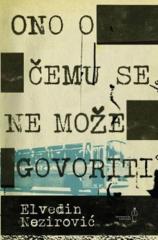
Ono o čemu se ne može govoriti

Ono o čemu se ne može govoriti

Elvedin Nezirović

The novel is written as an autobiography since for Nezirović, writing is a healing job: it heals, heals wounds and eases the soul, but it is also a way to openly tell society everything that follows him.

Buybook, 2021.
Croatian. Latin alphabet. Paperback.
11.24
Zanimljiva vremena, nemirna vremena: S Lešekom Kolakovskim razgovarao Zbignjev Mencel

Zanimljiva vremena, nemirna vremena: S Lešekom Kolakovskim razgovarao Zbignjev Mencel

Leszek Kolakowski

A book of interviews in which Kołakowski retrospectively describes his life and intellectual journey through the turbulent 20th century – from pre-war Poland, through Nazi occupation, Stalinism, revisionist Marxism, to exile in the West.

Službeni glasnik, 2009.
Serbian. Cyrillic alphabet. Paperback.
The book consists of two volumes
19.44
Spašeni jezik: Povijest jedne mladosti

Spašeni jezik: Povijest jedne mladosti

Elias Canetti

Autobiographical novel by Elias Canetti. The story begins when his young nanny secretly meets with the young man, which he sees as a child. The young man constantly threatened him that if he said anything to the adults, he would cut out his tongue.

Znanje, 1982.
Croatian. Latin alphabet. Hardcover with dust jacket.
8.76
Pod suncem Toskane

Pod suncem Toskane

Frances Mayes

Under the Tuscan Sun is a 1996 memoir by the American writer Frances Mayes. It was adapted by director Audrey Wells for the 2003 film Under the Tuscan Sun.

Algoritam, 2004.
Croatian. Latin alphabet. Paperback.
5.28