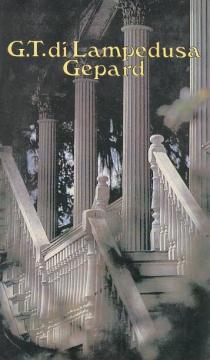
Gepard

Gepard

Giuseppe Tomasi Di Lampedusa

"The Cheetah" is not just a historical novel - it is a meditation on time, change and the Sicilian soul. The style is sumptuous, ironic and deeply sad. Published posthumously, it has become one of the greatest Italian novels of the 20th century and a worl

Sicily, May 1860. As Garibaldi disembarks his red shirts to overthrow the Bourbons, Prince Fabrizio Salina, “The Cheetah,” an old-school aristocrat, watches his world disappear before his eyes. The novel follows the last seven years of his life (1860–1883) and the fate of his family through the unification of Italy.

The central figure is Fabrizio – wise, melancholic, aware that his class is doomed to extinction. His nephew Tancredi, an opportunist and charming cynic, utters the key sentence: “If we want everything to remain the same, everything must change.” Tancredi, after a brief Garibaldian episode, marries Angela, daughter of the wealthy and vulgarly ambitious mayor Don Calogero Sedàra – symbol of the new bourgeoisie taking power.

Through magnificent scenes (a ball in Palermo in 1862, a quail hunt, family dinners, the death of a prince in 1883, and the final collapse in 1910), Lampedusa paints an elegy for a world: an aristocracy that is disappearing not because of violence, but because it no longer has a function. Everything is transient – ​​beauty, power, faith, even death itself.

“We were lions and cheetahs, and in our place come jackals and hyenas… but we will all, cheetahs and lions, jackals and sheep, continue to think that we are the salt of the earth.”

Original title
Il gattopardo
Translation
Mate Maras
Editor
Milan Mirić
Graphics design
Alfred Pal
Dimensions
21 x 12.5 cm
Pages
288
Publisher
Sveučilišna naklada Liber (SNL), Zagreb, 1982.
 
Latin alphabet. Hardcover with dust jacket.
Language: Croatian.

One copy is available

Condition:Used, excellent condition
 

Are you interested in another book? You can search the offer using our search engine or browse books by category.

You may also be interested in these titles

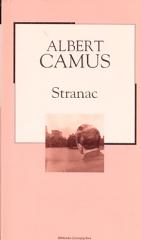
Stranac

Stranac

Albert Camus

The Stranger is the novel with which Camus achieved his first great success, influenced by Nietzsche's philosophy, Sartre's philosophy of existentialism, and, most of all, his philosophy of the absurd.

Globus, 2004.
Croatian. Latin alphabet. Hardcover with dust jacket.
6.384.79 - 6.42
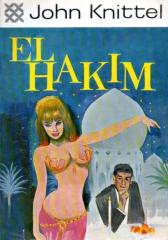
El Hakim

El Hakim

John Knittel

The book "El Hakim" by John Knittel is one of his most famous novels, combining the exotic setting of Egypt with universal themes of humanity, medicine, morality, and spirituality.

Mladost, 1969.
Croatian. Latin alphabet. Hardcover with dust jacket.
3.98
Krhka sreća

Krhka sreća

Alfred Kern
Mladost, 1963.
Croatian. Latin alphabet. Hardcover with dust jacket.
3.99 - 4.76
Skandal

Skandal

Edmund Schiddel
Bratstvo-Jedinstvo, 1966.
Serbian. Latin alphabet. Hardcover with dust jacket.
3.98 - 4.99
Kraljev gambit

Kraljev gambit

Branka Slijepčević
Znanje, 1988.
Croatian. Latin alphabet. Hardcover with dust jacket.
4.22
Kao da me nema

Kao da me nema

Slavenka Drakulić

Slavenka Drakulić's novel is a harrowing story of mass rape during the Bosnian war. It has been published in sixteen countries so far, and was recently made into a feature film of the same name in an Irish-Swedish-Macedonian co-production.

Feral Tribune, 1999.
Croatian. Latin alphabet. Paperback.
16.32