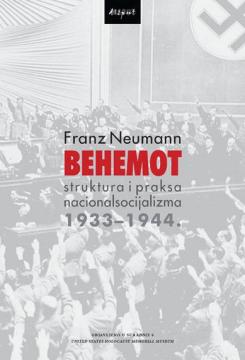
Behemot : struktura i praksa nacionalsocijalizma

Behemot : struktura i praksa nacionalsocijalizma

Franz Neumann

The book presents a structural analysis of the Third Reich through a theoretical and historical understanding of German National Socialism as an ideology, movement and order. Hitler's charismatic personality as a leader, which he preserved until the very

A classic account of the functioning of the government in Nazi Germany, which appeared in a Croatian translation only sixty years later. Like his distant predecessor Thomas Hobbes, who titled his main work after the monster Leviathan, the enemy of power and order, Neumann - also a great political thinker - titled his book after the name of Behemoth, the enemy of chaos, Leviathan's biblical rival.

The huge study "Behemoth" is the result of Neumann's intensive theoretical research into the economic and political roots of totalitarianism in modern industrial society, that is, the identification of the assumptions that enabled the emergence of National Socialism and its takeover of power.

Neumann analyzes the National Socialist system on the basis of rich empirical material as a chaotic system, as a negation of the state, a situation of lawlessness, disorder and anarchy, with a pronounced ambition to establish its hegemony over a vast territory. The book's provocative and controversial central thesis is that the Third Reich did not express a consistent ideology or have a coherent structure. Contrary to superficial depictions of the National Socialist state as a monolithic organization, Neumann shows that it was actually, in a sinister way, pluralistic and that the political will was formed in it through the wild competition of the most powerful social lobbies.

Original title
Behemoth
Translation
Damjan Lalović
Dimensions
24 x 17 cm
Pages
595
Publisher
Disput, Zagreb, 2012.
 
Latin alphabet. Paperback.
Language: Croatian.

No copies available

The last copy was sold recently.

 

Are you interested in another book? You can search the offer using our search engine or browse books by category.

You may also be interested in these titles

Tipovi prirodnog prava

Tipovi prirodnog prava

Franz Neumann
Dosije, 2013.
Serbian. Latin alphabet. Paperback.
4.99
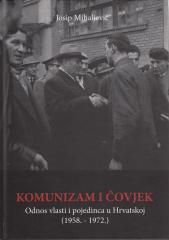
Komunizam i čovjek: Odnos vlasti i pojedinca u Hrvatskoj (1958.–1972.)

Komunizam i čovjek: Odnos vlasti i pojedinca u Hrvatskoj (1958.–1972.)

Josip Mihaljević

Josip Mihaljević's book analyzes the relationship between the government and the individual in communist Croatia (1958–1972), through repressive mechanisms, ideological pressures, and restrictions on personal freedom in the socialist system.

Hrvatski institut za povijest, 2016.
Croatian. Latin alphabet. Hardcover.
17.26
Teror narodu: Povijest OZNE, Titove političke policije

Teror narodu: Povijest OZNE, Titove političke policije

William Klinger

In the book, historian William Klinger investigates the origin and operation of OZNA - the brutal repressive apparatus of communist Yugoslavia, which monitored, imprisoned and liquidated political opponents.

Večernji list, 2014.
Croatian. Latin alphabet. Paperback.
7.34
Komunisti Jugoslavije 1919-1979.

Komunisti Jugoslavije 1919-1979.

Pero Morača, Stanislav Stojanović

The book provides an overview of the history of the Communist Party of Yugoslavia (KPJ) from its founding to the late 1970s, emphasizing its role in the revolution, self-government, and construction of Yugoslavia, with an ideologically colored perspective

Eksportpres, 1979.
Serbian. Latin alphabet. Hardcover with dust jacket.
11.98
Izabrani radovi

Izabrani radovi

Ljubo Boban

Selected Works of Academician Ljubo Boban (2022) brings together key texts on contemporary Croatian history of the 20th century. The foreword by Damir Agičić highlights Boban's methodological rigor and objectivity in researching sensitive topics.

Srednja Europa, 2022.
Croatian. Latin alphabet. Hardcover.
24.52
Sudbonosni podvig Jugoslavije: Podsjećanje na historijsko NE staljinizmu, događaj koji je opredijelio budućnost Jugoslavije

Sudbonosni podvig Jugoslavije: Podsjećanje na historijsko NE staljinizmu, događaj koji je opredijelio budućnost Jugoslavije

Raif Dizdarević

The book by Raif Dizdarević, one of the last living actors of Yugoslav diplomacy, presents his reconstruction of the most fateful moment of post-war Yugoslavia – the split with Stalin and the Informburo in 1948–1953.

Udruženje za modernu historiju (UMHIS), 2018.
Croatian. Latin alphabet. Paperback.
23.58