Behemot : struktura i praksa nacionalsocijalizma

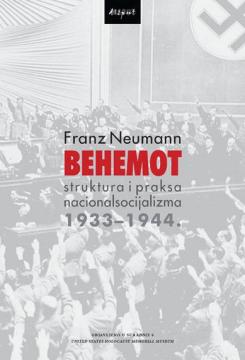
Behemot : struktura i praksa nacionalsocijalizma

Franz Neumann

The book presents a structural analysis of the Third Reich through a theoretical and historical understanding of German National Socialism as an ideology, movement and order. Hitler's charismatic personality as a leader, which he preserved until the very

A classic account of the functioning of the government in Nazi Germany, which appeared in a Croatian translation only sixty years later. Like his distant predecessor Thomas Hobbes, who titled his main work after the monster Leviathan, the enemy of power and order, Neumann - also a great political thinker - titled his book after the name of Behemoth, the enemy of chaos, Leviathan's biblical rival.

The huge study "Behemoth" is the result of Neumann's intensive theoretical research into the economic and political roots of totalitarianism in modern industrial society, that is, the identification of the assumptions that enabled the emergence of National Socialism and its takeover of power.

Neumann analyzes the National Socialist system on the basis of rich empirical material as a chaotic system, as a negation of the state, a situation of lawlessness, disorder and anarchy, with a pronounced ambition to establish its hegemony over a vast territory. The book's provocative and controversial central thesis is that the Third Reich did not express a consistent ideology or have a coherent structure. Contrary to superficial depictions of the National Socialist state as a monolithic organization, Neumann shows that it was actually, in a sinister way, pluralistic and that the political will was formed in it through the wild competition of the most powerful social lobbies.

Naslov originala
Behemoth
Prevod
Damjan Lalović
Dimenzije
24 x 17 cm
Broj strana
595
Izdavač
Disput, Zagreb, 2012.
 
Latinica. Broširano.
Jezik: Hrvatski.

Nema primeraka u ponudi

Poslednji primerak je nedavno prodat.

 

Zanima Vas i neka druga knjiga? Možete pretražiti našu ponudu pomoću pretrage ili prelistati knjige po kategorijama.

Možda će Vas zanimati i ovi naslovi

Tipovi prirodnog prava

Tipovi prirodnog prava

Franz Neumann
Dosije, 2013.
Srpski. Latinica. Broširano.
4,99
Komunizam i čovjek: Odnos vlasti i pojedinca u Hrvatskoj (1958.–1972.)

Komunizam i čovjek: Odnos vlasti i pojedinca u Hrvatskoj (1958.–1972.)

Josip Mihaljević

Josip Mihaljević's book analyzes the relationship between the government and the individual in communist Croatia (1958–1972), through repressive mechanisms, ideological pressures, and restrictions on personal freedom in the socialist system.

Hrvatski institut za povijest, 2016.
Hrvatski. Latinica. Tvrde korice.
17,26
Zarobljeni um

Zarobljeni um

Czesław Miłosz

The Captive Mind is a book published in France in 1953 by Czesław Miłosz, shortly after he was granted political asylum in Paris due to his conflict with the communist authorities in Poland, which was then under the control of the USSR.

BIGZ, 1987.
Srpski. Latinica. Tvrde korice s omotom.
11,489,18
Autobiografska kazivanja I-II

Autobiografska kazivanja I-II

Josip Broz-Tito
Narodna knjiga, 1982.
Hrvatski. Latinica. Tvrde korice s omotom.
Knjiga se sastoji od dva toma
17,34 - 23,44
Pola stoljeća povijesti Poljske: 1939.-1989. godine

Pola stoljeća povijesti Poljske: 1939.-1989. godine

Andrzej Paczkowski
Profil International, 2001.
Hrvatski. Latinica. Tvrde korice.
14,2610,70
Umiranje na rate: Dachauski procesi

Umiranje na rate: Dachauski procesi

Igor Torkar, Boris Fakin

A novel by Igor Torkar (Boris Fakin) dealing with "Dachau processes". Through a mixture of documentary and fiction, Torkar exposes the taboo subject of the communist regime, basing the story on his own experience as a prisoner in Dachau and Goli otok.

Globus, 1984.
Hrvatski. Latinica. Tvrde korice s omotom.
9,62 - 9,76