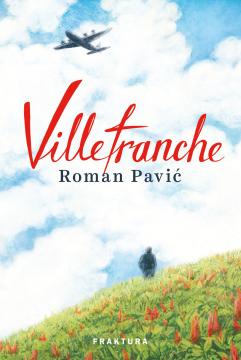
Villefranche

Villefranche

Roman Pavić

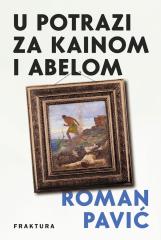
Roman Pavić's Villefranche is a novel about the destinies of people who follow their dreams regardless of obstacles, about those who are not afraid to go against the flow, about the best in their professions.

When at the end of 2009, in the central Carthusian monastery near Grenoble, art historian Ivan Radić, a great connoisseur of Hieronymus Bosch's works, and monk Bernard, the greatest restorer of that Renaissance artist, met, they had no idea that apart from art, they were bound by a common homeland and the only rebellion in one SS division. , the one from the fall of 1943 in the French town of Villefranche. Ivan Radić's grandfather and his brother were killed there, and the monk, then a young man, one of the few surviving rebels, was a participant in that rebellion after he was forcibly conscripted in Zagreb into the 13th SS Handžar division made up of Croats and Bosnians.

As a boy, Ivan Radić accidentally met the famous painter Ivo Šebalj when he accompanied his seriously ill father to Zagreb for treatment from his native Osijek. At that time, he had no idea that the history of art would be his life's preoccupation, nor that his youth, like many of his peers, would be interrupted by the war, in which he would volunteer, nor that rock concerts and study would be replaced by life on the front, nor that thanks to love and his own strength to overcome all the injustices that will await him upon his return to civilian life.

Through two narrative lines, through two destinies, Roman Pavić tells the story of "ordinary people" who, in great historical events, manage to fight for themselves and theirs thanks to persistence, courage, knowledge, desire and love.

Editor
Seid Serdarević
Graphics design
Ivan Stanišić
Dimensions
23 x 15 cm
Pages
336
Publisher
Fraktura, Zaprešić, 2024.
 
Latin alphabet. Hardcover with dust jacket.
Language: Croatian.
ISBN
978-9-53358-700-4

Two copies are available

Copy number 1

Condition:Unused

Copy number 2

Condition:Unused
 

Are you interested in another book? You can search the offer using our search engine or browse books by category.

You may also be interested in these titles

Ljubi bližnjega svoga

Ljubi bližnjega svoga

Erich Maria Remarque

The novel tells the intertwined destinies of three emigrants who leave Germany during National Socialism but, without documents, cannot find asylum in any European country...

SKD Prosvjeta, 1954.
Croatian. Latin alphabet. Hardcover.
3.98
Slavna budućnost naše zemlje

Slavna budućnost naše zemlje

Mirko Golubić

The book is a genre of popular science literature with elements of technological vision and futurism, characteristic of the era in which it was created – the time of the Cold War, the space race, and great expectations from science.

Znaci vremena, 1972.
Croatian. Latin alphabet. Paperback.
2.98
U traganju za izgubljenim vremenom 13: Pronađeno vrijeme 2

U traganju za izgubljenim vremenom 13: Pronađeno vrijeme 2

Marcel Proust

After many years, the protagonist returns to Paris and meets faces from his youth. He becomes aware of the past and decides that the book he is going to write will be "a big cemetery" and "all his past life". Thus ends Found Time.

Mladost, 1972.
Croatian. Latin alphabet. Hardcover with dust jacket.
5.00
Toma varalica

Toma varalica

Jean Cocteau

The main character of the novel is a young man who falsely presents himself as Prince de H, and under this identity enters high society.

Kultura, 1962.
Serbian. Latin alphabet. Paperback.
2.98
U traganju za izgubljenim vremenom 10: Zatočenica 2

U traganju za izgubljenim vremenom 10: Zatočenica 2

Marcel Proust

The prisoner is a depiction of life in Albertina. The love is one-sided, but the protagonist does not have the strength to end the relationship. Bergotte and Swann die, and after an argument with Albertine, he notices one morning that she has disappeared.

Mladost, 1972.
Croatian. Latin alphabet. Hardcover with dust jacket.
5.00
U traganju za izgubljenim vremenom 9: Zatočenica 1

U traganju za izgubljenim vremenom 9: Zatočenica 1

Marcel Proust

The prisoner is a depiction of life in Albertina. The love is one-sided, but the protagonist does not have the strength to end the relationship. Bergotte and Swann die, and after an argument with Albertine, he notices one morning that she has disappeared.

Mladost, 1972.
Croatian. Latin alphabet. Hardcover with dust jacket.
5.00