Tomas Man

Tomas Man

György Lukács

György Lukács, ungarischer Philosoph und Literaturkritiker, analysierte die Werke von Thomas Mann in seinem Buch „Thomas Mann“, in dem er sein literarisches Werk durch das Prisma der marxistischen Ästhetik und des historischen Materialismus untersucht.

Lukács sieht in Mann eine Schlüsselfigur der europäischen Literatur, die künstlerisches Schaffen tief mit sozialen, historischen und moralischen Fragen verbindet.

Lukács hält Thomas Mann für den Boten des Niedergangs des Bürgertums. Seine Romane wie „The Magic Hill“ und „The Buddenbrooks“ schildern die moralische und spirituelle Krise der Mittelschicht durch Generationenkonflikte und individuelle Dilemmata. Lukács betont Manns Fähigkeit, historische und soziale Veränderungen in die Literatur zu integrieren. Manns Figuren repräsentieren oft den Konflikt zwischen Tradition und Moderne, zwischen individuellen Ansprüchen und gesellschaftlichen Erwartungen.

Besonderes Augenmerk legt Lukács auf Manns Widerstand gegen den Faschismus. Er weist auf „Doktor Faustus“ als ein Werk hin, das durch die Geschichte des moralischen Verfalls des Protagonisten den geistigen Zusammenbruch Deutschlands während der Nazizeit symbolisiert. Lukács sieht Thomas Mann als einen zutiefst philosophischen Schriftsteller, der große ethische Dilemmata anhand der Literatur betrachtet. In seinen Werken geht es häufig um Themen wie Tod, Zeit, Schuld und Erlösung.

Lukács lobt Manns Fähigkeit, „das Ästhetische und das Ethische zu verbinden“ und komplexe menschliche Schicksale durch das Prisma historischer und sozialer Kräfte darzustellen. Er glaubt, dass Manns Werke die gesellschaftliche Realität nicht nur widerspiegeln, sondern sie auch kritisieren und den Leser zum Nachdenken über das Schicksal der Gesellschaft anregen.

Lukács‘ Buch „Thomas Mann“ ist nicht nur eine Studie über einen Schriftsteller, sondern auch über die Rolle der Literatur beim Verstehen und Verändern der Welt.

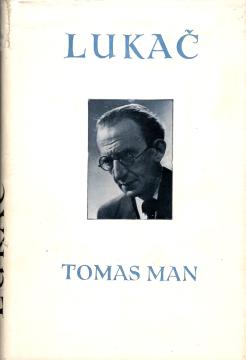
Original title
Thomas Mann
Translation
Irma Lisičar, Ver Stojić
Editor
Miloš Đorđević
Dimensions
20 x 13 cm
Pages
144
Publisher
Kultura, Beograd, 1958.
 
Latin alphabet. Hardcover with dust jacket.
Language: Serbian.

No copies available

The last copy was sold recently.
 

Are you interested in another book? You can search the offer using our search engine or browse books by category.

You may also be interested in these titles

Ogledi o realizmu

Ogledi o realizmu

György Lukács
Kultura, 1947.
Croatian. Latin alphabet. Hardcover.
4.99
Poglavlje o arhitekturi

Poglavlje o arhitekturi

György Lukács
Sandorf, 2017.
Croatian. Latin alphabet. Paperback.
9.53
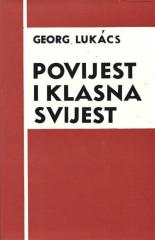
Povijest i klasna svijest: Studije o marksističkoj dijalektici

Povijest i klasna svijest: Studije o marksističkoj dijalektici

György Lukács

A 1923 book by the Hungarian philosopher György Lukács, in which the author emphasizes the influence of the philosopher Georg W. F. Hegel on Karl Marx, and analyzes the concept of "class" and attempts to offer a philosophical justification for Bolshevism.

Naprijed, 1970.
Croatian. Latin alphabet. Hardcover with dust jacket.
21.46
Hegelova ontologija i teorija povijesnosti

Hegelova ontologija i teorija povijesnosti

Herbert Marcuse

In this work, Marcuse deals with the interpretation of Hegel's philosophy through the prism of ontology and historicity, trying to connect it with questions that were relevant to existentialism and phenomenology in the interwar period.

Veselin Masleša, 1981.
Croatian. Latin alphabet. Paperback.
13.42
Karl Marx: Čovjek preinake svijeta

Karl Marx: Čovjek preinake svijeta

Davor Kačar, Boris Jurinić

Karl Marx - The Man Who Changed the World (1983) by Davor Kačar and Boris Jurinić is a study of the life and work of Karl Marx. It explores his philosophy, economic theory, and influence on world history through Marxism, with illustrations and documents.

Svjetlost, 1983.
Croatian. Latin alphabet. Hardcover with dust jacket.
12.24
Karl Marks: biografija

Karl Marks: biografija

Rolf Hosfeld

In this innovative biography, Rolf Hosfeld opens the door to the turbulent world of Karl Marx – a thinker whose ideas continue to shape our world. Hosfeld is not writing a hagiography, but a subtle story of a man full of contradictions.

Karpos, 2014.
Serbian. Latin alphabet. Paperback.
13.5210.82