Ljepši kraj

Ljepši kraj

Bekim Sejranović

Honestly, persuasively, directly, wittily, self-ironically, the author narrates and creates a very special literary work in terms of style and content.

The hero of Lepše kraj retreated to his grandfather's cabin on a Bosnian mountain. In it, he tries to recover after the dramatic collapse of his love story with a Norwegian woman who was always weak against men from the former Yugoslavia, and therefore paid quite a price. As he remembers his former life, trying to understand what really happened, a new story begins, in a snow-covered mountain, while only Wahhabis who live in a nearby abandoned village pass by his log cabin. At the center of it is a woman again, and the road leads our heroes to Oslo again.

Telling two stories, one backwards and the other forwards, one that takes place in Norway and the other in Bosnia, Bekim Sejranović gets under the skin of his hero. It convincingly portrays his traumas, emotional insecurity, existential fear, drug addiction, sexual dysfunction, while managing to be both lucid and incredibly funny.

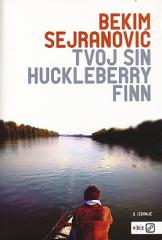
Jjebši kraj is the central part of Bekim Sejranović's novel trilogy, which also includes the novels Nigjde, niotkuda and Tvoj sin Huckleberry Finn, while the stories from Sandal and Diary of a Nomad are a kind of extension of that world that enable a more complete understanding of Sejranović's storytelling universe.

It is one of the most well-rounded and interesting narrative works in the post-Yugoslav regions, so for those who have not read Bekim Sejranović's A Better End, it can be the beginning of a fantastic literary journey.

Editor
Roman Simić
Dimensions
19.5 x 14.5 cm
Pages
266
Publisher
Profil Knjiga, Zagreb, 2010.
 
Latin alphabet. Paperback.
Language: Croatian.
ISBN
978-9-53319-051-8

No copies available

The last copy was sold recently.
 

Are you interested in another book? You can search the offer using our search engine or browse books by category.

You may also be interested in these titles

Sovin huk

Sovin huk

Patricia Highsmith

Bilo mu je previše neprijatno čak i da pomisli na sramotu koju bi doživeo ako bi ga uhvatili kako voajerizuje. Voajeri obično gledaju žene kako se svlače... Ono što je osećao, ono što ga je mučilo, bilo je kao strašna žeđ koju je morao da utoli.

Znanje, 2003.
Croatian. Latin alphabet. Paperback.
4.46
Ne zaljubljuj se u neznanca

Ne zaljubljuj se u neznanca

Harold Robbins

„Ne zaljubljuj se u stranca“ (1948), prvi roman Harolda Robinsa, prati Frenka Kejna, siroče iz siromašnog njujorškog naselja Hels Kičen. Odrastajući u katoličkom sirotištu, Frenk otkriva svoje jevrejsko poreklo, koje ga izoluje od okoline.

Znanje, 1981.
Croatian. Latin alphabet. Hardcover with dust jacket.
The book consists of two volumes
9.98
Zapisci Maltea Lauridsa Briggea

Zapisci Maltea Lauridsa Briggea

Rainer Maria Rilke

„Beleške Maltea Lauridsa Brigea“ (1910) Rajnera Marije Rilkea, njegov jedini roman, je introspektivni i poetski prikaz unutrašnjih previranja mladog danskog plemića, Maltea Lauridsa Brigea, u Parizu.

Sveučilišna naklada Liber (SNL), 1979.
Croatian. Latin alphabet. Hardcover with dust jacket.
5.46
Tirkizni orao

Tirkizni orao

Michal Ajvaz

U svojim pričama, autor prepliće stvarne gradske toponime i natprirodne pojave sa motivima iz Mejrinkovih mističnih romana o Pragu i magičnim realizmom Borhesovog tipa.

Profil International, 2013.
Croatian. Latin alphabet. Paperback.
8.74
Večernja zvijezda

Večernja zvijezda

Alan Hollinghurst

Glavna tema romana je opsjedajuća i destruktivna ljubav, opisana lijepim i istančanim stilom.

Profil International, 2008.
Croatian. Latin alphabet. Paperback.
14.99
Mirni Amerikanac

Mirni Amerikanac

Graham Greene

„Tihi Amerikanac“ (1955) smešten je u Vijetnam pedesetih godina 20. veka, tokom francuske kolonijalne borbe protiv pobunjenika. Kroz atmosferu Sajgona, Grin stvara napetu priču o ljubavi i političkim intrigama, sa snažnom kritikom Vijetnamskog rata i šire

Bratstvo-Jedinstvo, 1968.
Serbian. Latin alphabet. Paperback.
4.26