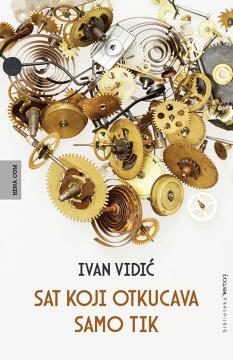
Sat koji otkucava samo tik

Sat koji otkucava samo tik

Ivan Vidić

The ticking clock is a novel about love, betrayal, revenge and crime. Beginning as a story about the passionate love and marriage of the university professor Julio and the young student Lujza, the novel sovereignly takes surprising genre directions.

Playwright and novelist Ivan Vidić intertwines several characters, fictional sleeves, literary and pop-cultural genres, and the heart attack and subsequent heart transplant of a deceived wife and a disappointed professor will open numerous black holes in today's world where "no one has control and madness is the master of the situation". .

The skill and firm narrative hand with which Vidić holds together the themes of love passion and despair, the dark side of the university milieu, migrant smuggling, real estate brokerage, crime and terrorism is truly fascinating, and for the reader it is a furious, exciting and at times grotesque race from chapter to chapter. to chapter, from beginning to end. In the end, there are questions that we regularly ask ourselves anyway without the possibility of a real answer - when are the private triggers activated that turn people into social outcasts and what is their connection with the terrifying world in global disarray? The novel is about the moment when the irrational takes over the situation, reason is lost in the face of feelings, anger and uncontrolled actions. When private madness becomes an "unconscious social revolution", there is no longer any difference between seriousness and farce, humor and horror, in that strange time in which it barely ticks and only - tick!

Editor
Jagna Pogačnik
Graphics design
Jasna Goreta
Dimensions
20.5 x 13.5 cm
Pages
344
Publisher
Hena Com, Zagreb, 2023.
 
Latin alphabet. Hardcover with dust jacket.
Language: Croatian.
ISBN
978-9-53259-452-2

One copy is available

Condition:Unused
 

Are you interested in another book? You can search the offer using our search engine or browse books by category.

You may also be interested in these titles

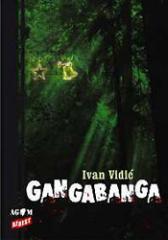
Gangabanga

Gangabanga

Ivan Vidić
AGM, 2006.
Croatian. Latin alphabet. Paperback.
9.996.99
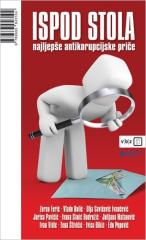
Ispod stola

Ispod stola

Zoran Ferić, Vlado Bulić, Olja Savičević Ivančević, Jurica Pavičić, Ivana Simić Bodrožić, Julijan...
VBZ, 2011.
Croatian. Latin alphabet. Paperback.
5.68
Četrdeset pet vitezova, sv. 1-2

Četrdeset pet vitezova, sv. 1-2

Alexandre Dumas

Alexandre Dumas – The Forty-Five Knights, published in 1966, is part of a grand trilogy about the political and religious turmoil in France during the late 16th century.

Epoha, 1966.
Croatian. Latin alphabet. Hardcover with dust jacket.
The book consists of two volumes
9.48
Konjički gambit

Konjički gambit

William Faulkner

‘It was never just a game that reflected all human passion and hope and madness, and then it came true.’ ‘Okay,’ said the young man, ‘don’t say you weren’t warned.’

Izdavački zavod Jugoslavija, 1967.
Serbian. Latin alphabet. Paperback.
4.98
Morski orao

Morski orao

Eduard Peisson

Édouard Peisson, a French writer specializing in maritime novels, brings a story set in the world of the sea and ships in this work, which is typical of his oeuvre.

Svjetlost, 1964.
Croatian. Latin alphabet. Paperback.
2.64
Eugenija Grande

Eugenija Grande

Honore de Balzac

"Eugénie Grandet" (1833), part of Balzac's Human Comedy, is a realistic novel that explores greed, family relationships, and the sacrifices of love in provincial French society.

Svjetlost, 1981.
Croatian. Latin alphabet. Hardcover.
3.88