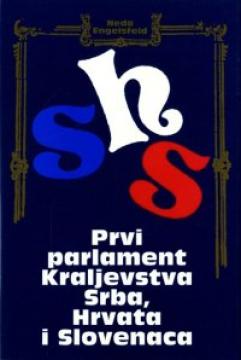
Prvi parlament Kraljevstva Srba, Hrvata i Slovenaca - Privremeno narodno predstavništvo
Neda Engelsfeld
Povijesni čin stvaranja Jugoslavije različito se interpretira. Razdoblja u kojima se slavi i mistificira taj čin smjenjuju se u vremenima u kojima se upozorava na to da baš u tom dobu nastaju nacionalni konflikti koji vode raspadu zajednice.
Ante Gugo explains the breakup of Yugoslavia, the formation of the Croatian state, and the circumstances that led to Operation Storm through a chronological account of events from 1985 to 1995.
The author explores why Tito remains a popular symbol of stability, social security and independence, despite critical views of his regime. The book maps the cultural, political and everyday manifestations of "Titostalgia".
Biblioteka XX vek, 2010.
Serbian. Latin alphabet. Paperback.
7.36 €
Homeland war • Croatian history • Yugoslavia • Political-historical essays
The book explores the political, military, and intelligence circumstances of the breakup of Yugoslavia and the events that led to the aggression against Croatia and the Homeland War.
Udruga dragovoljaca i veterana Domovinskog rata Republike Hrvatske, 2024.
Croatian. Latin alphabet. Hardcover.
18.32 €
World War II • Croatian history • Yugoslavia • Communism and fascism • Biography • Slavonia, Baranja & Srijem
Biography of revolutionary Erno Kiš (1909–1941), a prominent communist and anti-fascist from Baranja-Bačka. An account of his life, political struggle and suffering on the eve and at the beginning of World War II.
OK SKH, 1984.
Croatian. Latin alphabet. Hardcover.
9.76 €
Austro-Hungarian history • Croatian history • Yugoslavia
The work depicts the political development of Croatia from the period of Khuen-Héderváry's rule to the Treaty of Rapallo, analyzing key conflicts, national processes, and relations within the Monarchy and the Kingdom of SHS.
Hrvatska politička biblioteka, 1938.
Croatian. Latin alphabet. Hardcover.
8.326.66 €
Sociology • World War II • Croatian history • Yugoslavia • Communism and fascism • 20th Century
The book analyzes how conflicting historical narratives about the suffering and mass emigration of Italians from Istria and Rijeka developed in Croatia and Italy after World War II (1943–1956), debunking myths and encouraging an empathetic approach to the