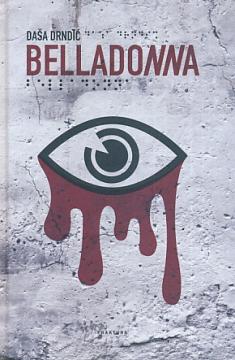
Belladonna
Andreas Ban is a writer and psychologist, above all an intellectual full of empathy, but his world has been collapsing for years, and when he retires into a miserable retirement and learns that he is ill, he takes a fresh look at the fragments of his life
In his struggle with illness and old age, Andreas Ban is both cynical and powerful, and while digging through his own past, he encounters stories of the disenfranchised, persecuted, helpless... and in the process uncompromisingly deals with a wide variety of taboos. In Belladonna, Daša Drndić examines and pushes to the extreme the themes of illness and the (im)possibility of living (and dying) in today's, completely dehumanized world and in times when old age and illness are something shameful and when only eternal youth and boundless beauty are propagated. Belladonna is a work in which the real and the fictional, the autobiographical and the invented, are intertwined, and Andreas Ban is a true hero of our time - he is an intellectual rejected by a society that, under the guise of correctness, suppresses the possibility of critical thinking. Daša Drndić was born in Zagreb in 1946. She studied English language and literature at the Faculty of Philology in Belgrade, as a Fulbright scholar she stayed at Southern Illinois University, and then studied at Case Western Reserve University. She worked as an editor at the publishing house "Vuk Karadžić", as an English language teacher at the National University "Đuro Salaj" and as an editor-playwright at Radio-television Belgrade. She received her doctorate at the University of Rijeka, where she taught modern British literature and creative writing at the Department of English. She published prose, literary criticism, analytical texts and translations in magazines and literary magazines, as well as feature and documentary radio dramas.
One copy is available