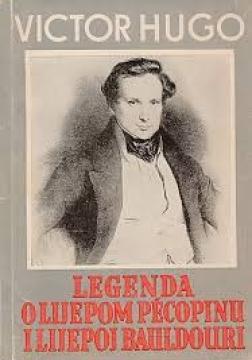
Legenda o lijepom Pécopinu i lijepoj Bauldouri

Legenda o lijepom Pécopinu i lijepoj Bauldouri

Victor Hugo

A romantic story by Victor Hugo, the 21st letter from his travelogue "Le Rhin" ("The Rhine", 1842). A romantic classic, similar to the fairy tales of the Brothers Grimm or Andersen, but with Hugo's deep emotionality and philosophy of eternal love.

The story takes place in medieval Germany, in a romantic, fairy-tale landscape along the Rhine. The handsome young knight Pecopin and the beautiful Bauldour have been in love with each other since childhood; their fathers have betrothed them. On their wedding day, Pecopin goes hunting for a huge boar that is terrorizing the village. In pursuit, the devil (in the form of a boar or a hunter) lures him into an enchanted forest, where time stops flowing normally: Pecopin hunts for centuries, goes through ages, wars and changes, but cannot return.

After 100 years, Pecopin finally returns – old, exhausted, but still in love. He finds Bauldour: she has waited faithfully, but has died of grief and old age. In the dramatic finale, love conquers death – Pecopin finds her in the grave, and the spirits are united in eternity.

Hugo uses folkloric motifs (the eternal hunt, the devil's illusion, the Rhine as a symbol of transience) to create a romantic fairy tale about love that transcends time, death, and fate. The story is lyrical, full of poetic descriptions of nature, medieval chivalry, and melancholy – typical of Hugo's style in "Le Rhin," where he mixes travelogue, history, and fiction.

Original title
Légende du beau Pécopin et de la belle Bauldour
Translation
Kruno Ilić
Editor
Gustav Krklec
Dimensions
16.5 x 12 cm
Pages
81
Publisher
Zora, Zagreb, 1951.
 
Latin alphabet. Paperback.
Language: Croatian.

One copy is available

Condition:Used, excellent condition
 

Are you interested in another book? You can search the offer using our search engine or browse books by category.

You may also be interested in these titles

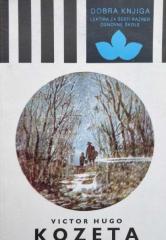
Cosette, Gavroche

Cosette, Gavroche

Victor Hugo
Mladost, 1971.
Croatian. Latin alphabet. Hardcover.
6.22 - 6.64
Zvonar bogorodičine crkve

Zvonar bogorodičine crkve

Victor Hugo

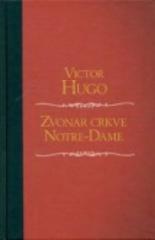
Zvonar bogorodičine crkve (1831.) nije samo priča o ljubavi i tragediji – to je živa slika Pariza na pragu renesanse, gdje gotička katedrala Notre-Dame postaje gotovo glavni lik, živo biće od kamena koje diše poviješću, patnjom i ljepotom.

Svjetlost, 1973.
Serbian. Latin alphabet. Hardcover.
The book consists of two volumes
7.38
Bogorodičina crkva u Parizu

Bogorodičina crkva u Parizu

Victor Hugo

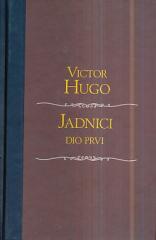
U središtu Igoovog monumentalnog dela i jednog od najznačajnijih romana francuske književnosti nalaze se tri izuzetna lika uhvaćena u mrežu strasti i osvete.

Svjetlost, 1982.
Croatian. Latin alphabet. Hardcover.
4.82
Mama Leone

Mama Leone

Miljenko Jergović

Jergovićeve priče na ironičan način oslikavaju jedno djetinjstvo i jedno odrastanje. Jedina stvarnost ove autobiografske proze su seljenja iz mjesta u mjesto i iz države u državu. Snaga i ljepota nalaze se u suptilnim nitima kojima tka svoje sličice.

Durieux, 1999.
Croatian. Latin alphabet. Paperback.
8.56
Sabrana djela A. P. Čehova #1: Humoreske

Sabrana djela A. P. Čehova #1: Humoreske

Anton Pavlovič Čehov

U ovu knjigu ušli su Čehovljevi radovi iz godine 1880-1885., tj. humoreske, novele i crtice, počevši od Pisama učenome susjedu, koje djelo je Čehov smatrao početkom svoje literarne karijere.

Zora, 1959.
Croatian. Latin alphabet. Hardcover with dust jacket.
9.54
Sikamora

Sikamora

Goran Samardžić

„Sikamura“ je zbirka koja ne nudi jasne odgovore, nego potiče čitatelja na tumačenje i refleksiju, čineći je zahtjevnom, ali značajnom u kontekstu suvremene književnosti.

Bosanska knjiga, 1997.
Croatian. Latin alphabet. Paperback.
5.98