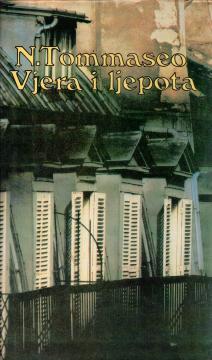
Vjera i ljepota
In the novel Faith and Beauty (1840), Niccolò Tommaseo follows the love and marriage of Giovanni and Maria, Italian immigrants in France. After turbulent pasts, they meet in Quimper, fall in love, get married, and struggle with temptations.
Faith and Beauty is the only major prose work by Niccolò Tommase (1802–1874), a Dalmatian writer, lexicographer and moralist, written in exile in Corsica. The novel is divided into six books and has a strong autobiographical charge: Tommaseo deals with his own internal struggle between sensuality and strict Catholic moralism.
The main characters are Giovanni (an intellectual, writer, refugee in France) and Maria (a beautiful but wounded woman with a tragic past – an orphan, a victim of bad influences and sins). They meet in Quimper in Brittany after mutual misfortunes. They start out as friends, confiding in each other their pasts (Giovanni: love affairs and remorse; Maria: youthful downfalls, suicide attempts, existential crisis). Love leads them towards marriage, which is not a romantic ideal, but a path towards calmness and spiritual elevation.
After the wedding, trials come: Maria falls ill with tuberculosis (a symbol of romantic “beauty in death”), Giovanni is seriously wounded in a duel for insulting the Italian people. While he recovers, she weakens and dies – in agony he finds solace in faith. Giovanni, mourning her, realizes that true beauty is not merely physical or aesthetic, but one that is imbued with faith in God; without faith, beauty leads to sin and guilt.
Tommaseo uses an introspective, lyrical style rich in metaphors, biblical allusions and psychological depth – the novel is more a meditation on sin, redemption and salvation than a classical plot. He rejects romantic sentimentalism, emphasizes moral rigour and Catholic orthodoxy, but also depicts the suffering of sensuality. The work was controversial because of its intimate confessions and erotic allusions, but today it is appreciated as an early example of the psychological novel in 19th-century Italian literature, a forerunner of the Manzoni tradition.
One copy is available