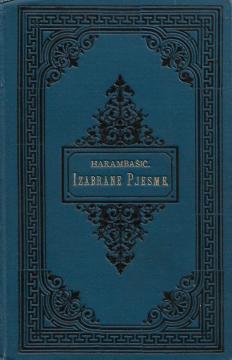
Izabrane pjesme
Rare book
Antique

Izabrane pjesme

August Harambašić

Selected Poems (1895) by August Harambašić is a collection of his most successful poems. It contains patriotic, libertarian and love lyrics, full of patriotic fervor, longing for freedom and romantic love for women and homeland.

August Harambašić (1861–1911), one of the most popular Croatian poets of the late 19th century, published Izabrane pjesme in 1895, published by Matica hrvatska in Zagreb. The collection is a selection from his earlier collections (Ružmarinke, Slobodarke, Tugomilke, Nevenke, etc.) and is considered the pinnacle of his poetic creativity.

Harambašić's poetry is characterized by a strong right-wing and romantic charge. There are two main themes that often intertwine: love for the homeland and love for a woman. Patriotic poems exude rebellious enthusiasm, longing for freedom, the glory of the Croatian past and hope for a better future. Love lyrics are sincere, simple and romantic, often with motifs of nature as a mirror of feelings.

The most famous poems from this collection include "Moja ljubav", "Tri čaše", "Na vrelu" and numerous patriotic verses that became almost folk in their time. Harambašić writes easily, melodically and accessiblely, using a rhythm close to a folk song, which brought him great popularity among a wide audience.

Although today's criticism points out that his poetry often suffers from pathos, clichés and insufficient formal refinement, in his time Harambašić was a true national bard. His verses encouraged the national spirit during the period of the struggle against Magyarization and absolutism.

Izabran poješta from 1895 is an important document of Croatian literature of the 19th century and the best insight into Harambašić's poetic world – fiery, passionate and deeply connected to the Croatian national revival and the ideology of the Right. The collection is a rare antiquarian edition today, but the poems can still be found in anthologies of Croatian poetry.

Dimensions
19 x 12 cm
Pages
238
Publisher
Štamparija Karla Albrechta (Jos. Wittasek), Zagreb, 1895.
 
Latin alphabet. Hardcover.
Language: Croatian.

One copy is available

Condition:Used, excellent condition
Specificity of this instance:
Ex Libris
 

Are you interested in another book? You can search the offer using our search engine or browse books by category.

You may also be interested in these titles

Ovdje živi Conan

Ovdje živi Conan

Miljenko Jergović

Young Bosnian Lyrical Poetry 1992-1996.

Durieux, 1997.
Croatian. Latin alphabet. Paperback.
8.98
Mirno teku rijeke: Stihovi 1957.-2005.

Mirno teku rijeke: Stihovi 1957.-2005.

Drago Britvić

A posthumous collection of poems and texts by Drago Britvić (1935–2005), one of the most influential Croatian songwriters of popular music and chanson. The book brings together his entire oeuvre, including the title song "Mirno teku rijeke".

V.B.Z, 2007.
Croatian. Latin alphabet. Paperback.
16.26
Ja se ne bojim

Ja se ne bojim

Lucija Zmijanović

The songs are about growing up, overcoming fears, and building one's own identity. The work emphasizes the importance of support, friendship, and inner strength.

Urednik d.o.o, 2014.
Croatian. Latin alphabet. Hardcover.
6.98
Rime

Rime

Guido Cavalcanti

Guido Cavalcanti's collection of Rime brings together love and philosophical poems from the early Italian dolce stil nuova. Through motifs of love, mind, and soul, Cavalcanti explores the conflict between reason and passion, and the transience of human fe

ArTresor naklada, 1998.
Croatian. Latin alphabet. Paperback.
9.32
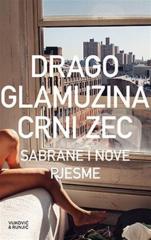
Crni zec (sabrane i nove pjesme)

Crni zec (sabrane i nove pjesme)

Drago Glamuzina

The title poem, "The Black Rabbit," represents a kind of symbolist maneuver within "real" poetry, because like Baudelaire's "Albatross," it possesses a pronounced unambiguous charge.

Vuković & Runjić, 2022.
Croatian. Latin alphabet. Paperback.
8.56 - 9.98
Pjesme iz UNICEF-sveske

Pjesme iz UNICEF-sveske

Emina Kovačević

Emina Kovačević (b. 1995, Jablanica, raised in Mostar) debuted with the collection Poems from a UNICEF Notebook. The title alludes to the blue UNICEF notebook from her childhood – a symbol of humanitarian aid, the post-war period, and her first writing.

Vrijeme, 2022.
Croatian. Latin alphabet. Paperback.
4.38