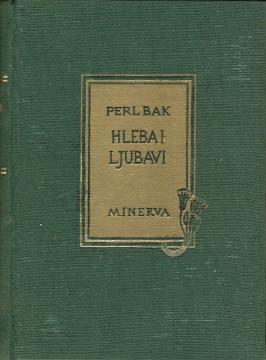
Hleba i ljubavi
Two Americans meet as young men in late 19th century China. One becomes a powerful media mogul obsessed with control, the other a humanitarian doctor. An epic tale of friendship, power, ideals and the clash of two opposing worldviews.
Bread and Love (1951) is a powerful and ambitious novel by Pearl S. Buck, a Nobel laureate known for her work on China and human nature.
The novel follows the fates of two Americans – William Lane and Clem Miller – who meet as young men in China during the Boxer Rebellion. Their paths diverge, but they meet again decades later in America.
William Lane, the son of wealthy missionaries, becomes a cold, ambitious media magnate who builds a newspaper empire and seeks to shape public opinion and the fate of the world. Clem Miller, of humble origins, becomes a doctor dedicated to helping people, humanitarian work, and quietly doing good. Through their conflict and complex relationship, Buck explores big themes: power and responsibility, idealism and greed, private success versus public good, and the question of what it means to be a “man of God” in the modern world.
The plot spans half a century – from China in the late 19th century, through World Wars I and II, the Great Depression, and post-war America. Pearl S. Buck masterfully paints a broad canvas of history, cultures, and human destinies, with a deep understanding of the contrasts between East and West.
The novel is rich, dynamic, and deeply humane – typical of Buck's prose. Critics consider it one of her most mature and ambitious works, in which the author raises important questions about the price of power and the meaning of life.
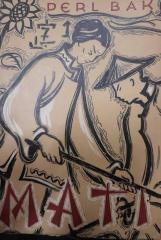
Bread and Love will especially delight lovers of great epic novels, fans of Pearl S. Buck (The Good Earth, Mother), and all those who love stories about the destinies of individuals in the maelstrom of history. A classic edition that can be read in one sitting and leaves a strong impression.
One copy is available