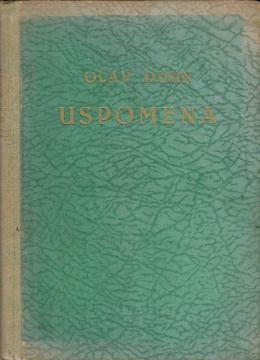
Uspomena
Olav Duun's novel "Uspomena" (1932) is a psychological drama about a son's return to his native village after his mother's suspicious death and suspicions about his father. It is one of the few works by Duun available in Croatian at the time.
Olav Duun (1876–1939) is one of the most important Norwegian writers of the 20th century, a master of psychological prose and a portrayal of rural life in Namdalen. He is best known for his large cycle Juvikfolke, but Memory is one of his later, independent works.
The novel is set in a small Norwegian rural community. The main character Brynjar returns home after his mother is found dead. His father Torberg falls under suspicion of murder, and Brynjar tries to reconstruct what really happened. The book is structured as a kind of crime story, but far from a classic thriller — Duun uses it as a framework for a deep psychological analysis of the characters, family relationships, memories, guilt, and inheritance.
Duun's style here is mature and subtle: he masterfully depicts the inner world of the peasants, the tension between the individual and the community, and the eternal struggle between good and evil in the human soul. The novel explores themes of responsibility, memory (ettermæle literally means “memory” or “voice after death”) and how the past shapes the present. The author uses dialectal elements and a strong sense of the nature and ambience of the typical Norwegian countryside.
Memory is considered one of Duun’s more successful later novels and is often noted for its modern structure and depth of character. The book will appeal to readers who enjoy psychological prose, Nordic literature and the subtle drama of family secrets. A powerful example of Duun’s ability to speak to universal human issues through a seemingly simple rural story.
One copy is available
- Slight damage to the cover
- The cover is missing