Pasoglavci ili Boj čeških graničara za seljačko pravo
Antique
Rare book

Pasoglavci ili Boj čeških graničara za seljačko pravo

Alois Jirásek

A rare Croatian edition of the historical novel by Alois Jirásek. The work brings to life the dramatic struggle of the Czech border guards – the Chods (Pasoglavaci) – who guarded the southern borders of the Czech Republic for centuries, defending rights a

The story is set at the end of the 17th century, after the Battle of White Mountain, when the new lords are trying to deprive the Chody of their old privileges. The novel powerfully depicts the conflict between a freedom-loving, proud people and feudal arbitrariness. The central figure is the legendary hero Jan Sladký Kozina, who leads the resistance and ultimately challenges his enemy Lomikar to God's judgment.

Jirásek masterfully combines historical fidelity with romantic enthusiasm and a rich storytelling gift. The book is full of vivid characters, tense scenes and a deep sense of justice, freedom and national pride. Because of these qualities, it has become a favorite reading and symbol of resistance against tyranny in Czech, but also in Croatian culture.

This is the second edition from 1929, translated by the great Croatian politician and writer Stjepan Radić, who was assassinated just six months before the publication of this book, which gives this edition additional historical weight. His widow Marija Radić added a short note to the beginning of the book on this occasion, with a clear allusion to Radić's martyrdom and the struggle of the Croatian people for freedom.

For all this, this work today represents an extremely sought-after antiquarian value – both for its literary quality and for its connection with the name of Stjepan Radić. Ideal for collectors of Czech and Croatian literature, lovers of historical novels and those who appreciate stories of justice, courage and resistance.

Original title
Psohlavci: historický obraz
Translation
Stjepan Radić
Dimensions
19 x 13 cm
Pages
316
Publisher
Naklada slavenske knjižare St. i M. Radić, Zagreb, 1929.
 
Latin alphabet. Hardcover.
Language: Croatian.

One copy is available

Condition:Used, very good condition
Specificity of this instance:
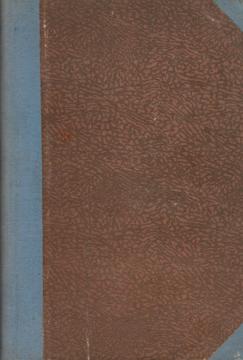
Bound
Damages or inconvenience notice:
  • Traces of patina
 

Are you interested in another book? You can search the offer using our search engine or browse books by category.

You may also be interested in these titles

Gradić gdje je vrijeme stalo

Gradić gdje je vrijeme stalo

Bohumil Hrabal

Bohumil Hrabal, a Czech writer known for his lyrical grotesque and humor, in his novel The Town Where Time Stood Still evokes childhood in the small town of Libeň (part of Prague), where time seems to stand still in a magical but melancholic world.

Hena Com, 2006.
Croatian. Latin alphabet. Paperback.
7.62
Hajduk Nikola Šuhaj

Hajduk Nikola Šuhaj

Ivan Olbracht

Hajduk Nikola Šuhaj (1933) is the most famous novel by Ivan Olbracht (real name Kamil Zeman, 1882–1952), a classic of 20th-century Czech literature. One of the most important works of Czech literature between the two wars.

Svjetlost, 1965.
Croatian. Latin alphabet. Paperback.
4.56
Kako što nastaje: novine, film, teatar

Kako što nastaje: novine, film, teatar

Karel Čapek

In a witty and instructive essay, Čapek describes how a newspaper, a film, and a theater play are created. Through humor and irony, he shows the complexity of the process – from idea to realization – and the different perspectives of the participants, dem

Znanje, 1985.
Croatian. Latin alphabet. Paperback.
4.76
Sol, ovce i kamenje

Sol, ovce i kamenje

Magdaléna Platzová

A fresh, uninhibited literary view of Dalmatia. Four stories about Dalmatia told in the manner of the best pages of Czech literature. Bringing to life the scents of salt and sea, the author writes vivid prose full of color and flavor.

Fraktura, 2006.
Croatian. Latin alphabet. Paperback.
8.546.40
Bijedna ljubav Musorgskog

Bijedna ljubav Musorgskog

Ivan Lukaš

Ivan Lukaš's novel depicts the tragic love story of the great Russian composer Modest Mussorgsky. The novel follows his unrequited love, artistic struggle, alcoholism, and decline in 19th-century imperial Russia.

Savremena biblioteka, 1940.
Croatian. Latin alphabet. Hardcover with dust jacket.
9.24
Prvo šišanje

Prvo šišanje

Bohumil Hrabal

The First Haircut, a short story written in 1970 and published in 1976, is the first in a series of prose pieces by Bohumil Hrabal describing Nymburk, the town where he spent his childhood. In 1981, The First Haircut was adapted for the screen by Jiry Men

24 sata, 2007.
Croatian. Latin alphabet. Paperback.
7.24