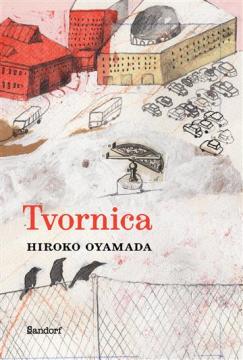
Tvornica

Tvornica

Hiroko Oyamada

Workers lost in the endless system of a large factory gradually lose their sense of purpose, while the boundaries between reality, routine and absurdity become increasingly blurred.

Factory by Japanese author Hiroko Oyamada is an unusual and atmospheric novel that explores alienation, the meaninglessness of work, and the search for identity in the world of large corporations through elements of absurdity, satire, and contemporary literature.

The plot follows three employees who work different, seemingly insignificant jobs within a vast industrial complex. One proofreads documents, another studies the moss next to the factory, and the third participates in obscure administrative tasks. Although they are employed, none of them really understand the purpose of their own work or how their contribution fits into the functioning of the factory.

As time passes, the vast complex begins to act like a closed world with its own rules, in which everyday routine erases the line between work and private life. The characters gradually accept the illogicalities of the system, while the sense of time, space, and reality becomes increasingly uncertain.

With a minimalist style and subtle humor, Oyamada creates a novel that is reminiscent of the works of Franz Kafka, but retains a recognizable Japanese sensibility. The Factory encourages the reader to reflect on modern work, bureaucracy, conformism, and the price an individual pays when they lose their sense of purpose and their own freedom.

Original title
Kojo
Translation
Jana Smrekar
Editor
Ivan Sršen
Graphics design
Nikša Eršek
Dimensions
21 x 14 cm
Pages
149
Publisher
Sandorf, Zagreb, 2025.
 
Latin alphabet. Paperback.
Language: Croatian.
ISBN
978-9-53351-583-0

One copy is available

Condition:Unused
 

Are you interested in another book? You can search the offer using our search engine or browse books by category.

You may also be interested in these titles

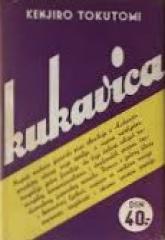
Kukavica

Kukavica

Kenjiro Tokutomi

The Coward (1898/1899) is a Japanese melodrama about the unhappy love of the young Nami-ko and her husband Takeo. One of the most famous works of Japanese literature of the Meiji period, it was a huge international hit at one time.

Hrvatska književna naklada neovisnih književnika, 1939.
Croatian. Latin alphabet. Hardcover with dust jacket.
7.36
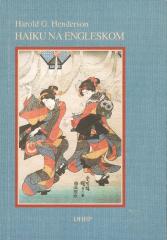
Haiku na engleskom

Haiku na engleskom

Harold G. Henderson

This book was published in 1965 in New York with the goal of "bringing the people of the USA and Japan closer together so that they appreciate and understand each other and the ways of life of both nations."

Društvo hrvatskih haiku pjesnika, 2000.
Croatian. Latin alphabet. Paperback.
7.46
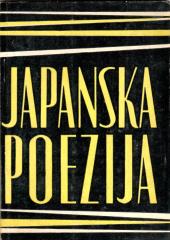
Japanska poezija

Japanska poezija

Japanese poetry brings a selection of haiku and classical lyric poems that, through brevity, silence, nature, and transience, capture the essence of Japanese aesthetic and spiritual experience.

Lykos, 1957.
Croatian. Latin alphabet. Paperback.
6.344.44
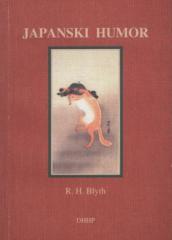
Japanski humor

Japanski humor

Reginald Horace Blyth

Blyth, known for his works on Japanese literature and haiku poetry, in this book analyzes how humor permeates Japanese everyday life, art and literature

Društvo hrvatskih haiku pjesnika, 2000.
Croatian. Latin alphabet. Paperback.
9.84
Ubojstvo komendatora 2: Preobrazbe metafore

Ubojstvo komendatora 2: Preobrazbe metafore

Haruki Murakami
Vuković & Runjić, 2020.
Croatian. Latin alphabet. Paperback.
15.80