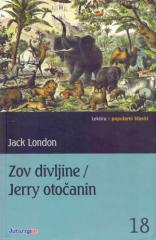
Zov divljine

Jack London’s famous adventure novel follows Buck, a dog who—kidnapped from a peaceful estate and thrust into the harsh environment of the Alaska Gold Rush—gradually awakens ancient instincts and answers the primal call of the wild.
The Call of the Wild (1903) by American author Jack London is one of the most famous and influential works of world adventure literature. Set in the late 19th century during the Klondike Gold Rush in Alaska and the Canadian Yukon, the novel is told from the perspective of Buck, a St. Bernard-Scotch Collie mix. Buck’s peaceful, comfortable life in sunny California is abruptly interrupted by his abduction and subsequent sale as a sled dog in the North. Thrust into a harsh, frozen world governed by the "law of club and fang," Buck is forced to adapt to grueling labor, cruel masters, and a struggle for survival among other dogs. Through a series of physical and emotional trials, the suppressed wild instincts of his ancestors gradually awaken within him. He experiences true human love and loyalty only with the noble John Thornton; however, following tragic events, Buck finally severs all ties with civilization and goes to live as the leader of a wolf pack. London’s novel is a powerful allegory about survival, adaptation, and primal natural forces. Thanks to its gripping plot, profound psychological portrayal of the animal world, and vivid descriptions of the wilderness, the work has become essential reading for generations of readers.
One copy is available