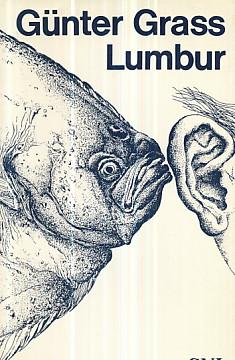
Lumbur

Lumbur

Günter Grass

Through the character of the wondrous *lumbur* fish and the narrator, this monumental and richly textured novel explores the history of human diet, gender relations, and socio-political changes from prehistory to the present day.

The magical-realist novel The Flounder (Der Butt) by Nobel laureate Günter Grass is one of the author’s most ambitious and complex literary achievements. The plot intertwines mythology, history, culinary arts, and the battle of the sexes across several millennia, spanning from the Stone Age to 20th-century Germany. The work’s central motif is inspired by the famous Brothers Grimm fairy tale about the fisherman and his wife, yet Grass radically transforms the story. At the heart of the narrative lies the flounder—a colossal, talking fish and a symbol of ancient male wisdom that, over the centuries, counsels men on how to dominate women. The story follows a timeless narrator and nine cooks (matriarchal figures representing various historical eras), thereby illustrating the evolution of human society through food, cooking, and matriarchy. In the modern era, a tribunal of women ultimately puts the captured flounder on trial for centuries of inciting patriarchal oppression. Through a lavish style rich in grotesque humor, satire, and philosophical reflection, Grass constructs a fascinating chronicle of human civilization that examines gender roles, ecology, politics, and the very act of artistic creation.

Original title
Der butt
Translation
Truda Stamać, Ante Stamać
Editor
Milan Mirić
Graphics design
Alfred Pal
Dimensions
21 x 13 cm
Pages
572
Publisher
Sveučilišna naklada Liber (SNL), Zagreb, 1979.
 
Latin alphabet. Hardcover with dust jacket.
Language: Croatian.

One copy is available

Condition:Used, excellent condition
 

Are you interested in another book? You can search the offer using our search engine or browse books by category.

You may also be interested in these titles

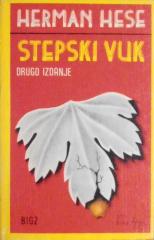
Stepski vuk

Stepski vuk

Hermann Hesse

The novel follows Harry Haller, a lonely intellectual torn between the human pursuit of spirituality and the wild, animal nature of the "steppe wolf". Through an identity crisis, he searches for meaning in the modern world.

BIGZ, 1980.
Serbian. Latin alphabet. Paperback.
7.96 €
Ljubav u doba kolere

Ljubav u doba kolere

Gabriel Garcia Marquez

A masterpiece about the tireless love of Florentino Ariza, who waits more than half a century for his youthful love Fermina Daza, portraying devotion, aging, and passion in the face of all social obstacles.

Vuković & Runjić, 1999.
Croatian. Latin alphabet. Paperback.
10.558.44 €
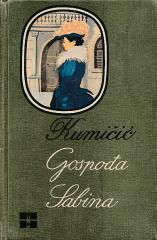
Gospođa Sabina

Gospođa Sabina

Eugen Kumičić

The naturalistic novel depicts the moral decline of Zagreb's high society through the character of the calculating Sabina, whose greed and scheming lead to familial and financial ruin.

Matica hrvatska, 1965.
Croatian. Latin alphabet. Hardcover.
5.504.40 €
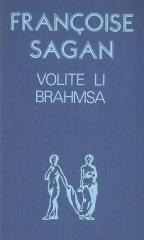
Volite li Brahmsa?

Volite li Brahmsa?

Thirty-nine-year-old Paule is torn between her addiction to unfaithful partner Roger and the passionate affection of the much younger Simon, in a touching story about loneliness and the fear of aging.

Naprijed, 1976.
Croatian. Latin alphabet. Hardcover.
4.00 €
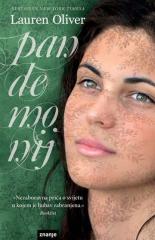
Pandemonij

Pandemonij

Lauren Oliver

"Pandemonium" is the suspenseful sequel to Lauren Oliver's dystopian series. Lena flees to the Wilds, where she joins the resistance and fights for survival in a world that has declared love a disease.

Znanje, 2013.
Croatian. Latin alphabet. Paperback.
5.954.46 €
Ponoćni susret

Ponoćni susret

Neven Orhel

„Ponoćni susret“ (1985) Nevena Orhela je napeti medicinski i psihološki triler. Knjiga istražuje ljudske sudbine, etičke dileme u medicini i neočekivane obrte kroz dramatičnu radnju.

Znanje, 1985.
Croatian. Latin alphabet. Hardcover with dust jacket.
3.88 €