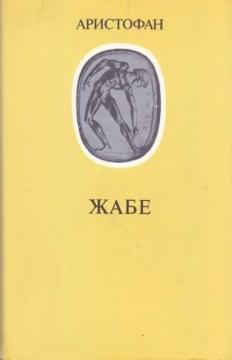
Žabe

Žabe

Aristofan

A comedy in which the god Dionysus descends into the underworld to bring the best tragedian back to Athens. Aeschylus and Euripides clash in an underground competition, and the comedy humorously discusses the fate of tragedy, art, and Athenian society in

The Frogs (405 BC) is one of the most famous and important comedies of Aristophanes. It was performed at the Lenaia immediately after the deaths of Euripides and Sophocles, at a time when Athens was in a deep political and moral crisis before its final defeat in the Peloponnesian War.

The god Dionysus, disappointed with contemporary tragedy, decides to descend to Hades to bring back Euripides, whom he considers the best poet. In the underworld, he encounters real chaos – Euripides and Aeschylus argue over who is the greater tragedian. Dionysus becomes the judge in a great literary competition in which the style, moral message, language and social usefulness of their tragedies are compared.

Through this ingenious parody, Aristophanes provides a deep and humorous critique of Athenian tragedy, but also of society as a whole. Aeschylus represents an old, heroic, moral and patriotic tragedy, while Euripides symbolizes a modern, rationalist, psychological and “democratic” drama. In the end, Dionysus chooses Aeschylus as the one who can "save" Athena.

Frogs is a masterpiece of literary criticism in dramatic form. In addition to satire on Euripides and Socrates, the comedy contains beautiful choruses of frogs and initiates, witty scenes and serious thoughts about the role of art in society. The work stands out for its richness of language, musicality and depth - it is simultaneously entertaining and philosophically serious. It is considered one of the highlights of Aristophanes' oeuvre and an indispensable work of ancient literature.

Frogs are still relevant today because they ask eternal questions: Which art is better? What art does a society in crisis need? And can art save the country?

Original title
Βάτραχοι
Translation
Radmila Šalabalić
Dimensions
20.5 x 13.5 cm
Pages
291
Publisher
Matica srpska, Novi Sad, 1987.
 
Distribution: 10,000 copies
 
Cyrillic alphabet. Hardcover with dust jacket.
Language: Serbian.

Two copies are available

Copy number 1

Condition:Unused

Copy number 2

Condition:Used, excellent condition
 

Are you interested in another book? You can search the offer using our search engine or browse books by category.

You may also be interested in these titles

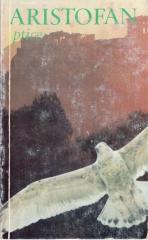
Ptice

Ptice

Aristofan

Aristophanes' most fantastic comedy. Two Athenians, out of boredom, persuade birds to build a new city in the clouds – Nephelokokygia (Cloudcuckoo City). The dream of an ideal society turns into a daring utopia and a parody of power.

VPA, 1988.
Croatian. Latin alphabet. Paperback.
7.99
Djela XIII: Theatralia: Scenski pokušaji, članci o kazalištu i koncertima, dio prvi (1897.–1909.)

Djela XIII: Theatralia: Scenski pokušaji, članci o kazalištu i koncertima, dio prvi (1897.–1909.)

Antun Gustav Matoš

The thirteenth volume of the first edition of Matoš's collected works brings together dramatic attempts and theater and concert criticism from the period 1897–1909, revealing Matoš as an insightful theater critic.

Naklada Binoza, 1939.
Croatian. Latin alphabet. Hardcover.
8.42
Moj prvih devedeset godina: Sjećanja

Moj prvih devedeset godina: Sjećanja

Tilla Durieux

My First Ninety Years by Tille Durieux is an autobiography of the famous Austrian actress who testifies to a turbulent life through theater, art, politics, and the dramatic events of the 20th century.

Durieux, 2001.
Croatian. Latin alphabet. Paperback.
14.62
Djela XIV: Theatralia: Scenski pokušaji, članci o kazalištu i koncertima, dio drugi (1910.–1913.)

Djela XIV: Theatralia: Scenski pokušaji, članci o kazalištu i koncertima, dio drugi (1910.–1913.)

Antun Gustav Matoš

The fourteenth volume of the first edition of Matoš's collected works brings theater and concert reviews from the period 1910–1913, confirming Matoš as a top aesthetician and cultural critic.

Naklada Binoza, 1939.
Croatian. Latin alphabet. Hardcover.
8.42