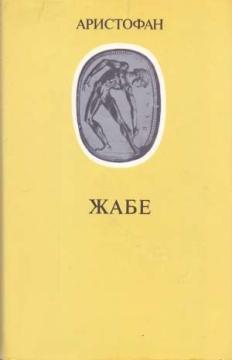
Žabe
A comedy in which the god Dionysus descends into the underworld to bring the best tragedian back to Athens. Aeschylus and Euripides clash in an underground competition, and the comedy humorously discusses the fate of tragedy, art, and Athenian society in
The Frogs (405 BC) is one of the most famous and important comedies of Aristophanes. It was performed at the Lenaia immediately after the deaths of Euripides and Sophocles, at a time when Athens was in a deep political and moral crisis before its final defeat in the Peloponnesian War.
The god Dionysus, disappointed with contemporary tragedy, decides to descend to Hades to bring back Euripides, whom he considers the best poet. In the underworld, he encounters real chaos – Euripides and Aeschylus argue over who is the greater tragedian. Dionysus becomes the judge in a great literary competition in which the style, moral message, language and social usefulness of their tragedies are compared.
Through this ingenious parody, Aristophanes provides a deep and humorous critique of Athenian tragedy, but also of society as a whole. Aeschylus represents an old, heroic, moral and patriotic tragedy, while Euripides symbolizes a modern, rationalist, psychological and “democratic” drama. In the end, Dionysus chooses Aeschylus as the one who can "save" Athena.
Frogs is a masterpiece of literary criticism in dramatic form. In addition to satire on Euripides and Socrates, the comedy contains beautiful choruses of frogs and initiates, witty scenes and serious thoughts about the role of art in society. The work stands out for its richness of language, musicality and depth - it is simultaneously entertaining and philosophically serious. It is considered one of the highlights of Aristophanes' oeuvre and an indispensable work of ancient literature.
Frogs are still relevant today because they ask eternal questions: Which art is better? What art does a society in crisis need? And can art save the country?
Angeboten wird ein Exemplar