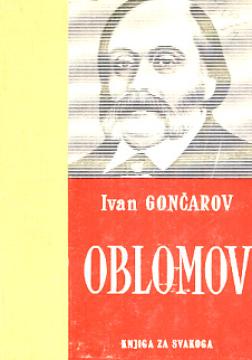
Oblomov
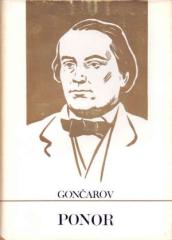
"Oblomov" follows the nobleman Ilya Ilyich Oblomov, a good-hearted man but paralyzed by laziness and passivity. His inability to act destroys his life, love, and future, pitting him against his active friend, Shtolac.
"Oblomov" by Ivan Goncharov is one of the key novels of 19th-century Russian literature and a profound study of the character and social contradictions of the tsarist era. The main character, Ilya Ilyich Oblomov, is a nobleman who spends almost the entire novel in his apartment, immersed in constant apathy and procrastination. His passivity is not just a personal flaw, but a symbol of the broader social inertia and decline of the class to which he belongs. Oblomov is gentle, emotional and idealistic, but unable to translate any thought into action.
The novel contrasts Oblomov with his opposite – his energetic and practical friend Andrei Shtolac. While Shtolac represents progress, work and modernization, Oblomov embodies nostalgia for a patriarchal, outdated way of life. The novel is given special emotional power by Oblomov's relationship with Olga Ilyina, whose love becomes a test of his ability to change. However, his nature and circumstances overcome his desire for progress, and he retreats into the safety of a routine and static life.
Goncharov uses humor, psychology, and social criticism to portray the inner world of a hero torn between desire and powerlessness. "Oblomov" is at once a tragic and tender portrait of a man who cannot overcome his own nature, but also a metaphor for an entire era on the verge of transformation.
One copy is available