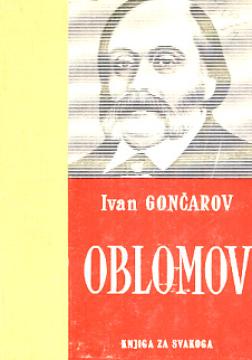
Oblomov

Oblomov

Ivan Gončarov

"Oblomov" follows the nobleman Ilya Ilyich Oblomov, a good-hearted man but paralyzed by laziness and passivity. His inability to act destroys his life, love, and future, pitting him against his active friend, Shtolac.

"Oblomov" by Ivan Goncharov is one of the key novels of 19th-century Russian literature and a profound study of the character and social contradictions of the tsarist era. The main character, Ilya Ilyich Oblomov, is a nobleman who spends almost the entire novel in his apartment, immersed in constant apathy and procrastination. His passivity is not just a personal flaw, but a symbol of the broader social inertia and decline of the class to which he belongs. Oblomov is gentle, emotional and idealistic, but unable to translate any thought into action.

The novel contrasts Oblomov with his opposite – his energetic and practical friend Andrei Shtolac. While Shtolac represents progress, work and modernization, Oblomov embodies nostalgia for a patriarchal, outdated way of life. The novel is given special emotional power by Oblomov's relationship with Olga Ilyina, whose love becomes a test of his ability to change. However, his nature and circumstances overcome his desire for progress, and he retreats into the safety of a routine and static life.

Goncharov uses humor, psychology, and social criticism to portray the inner world of a hero torn between desire and powerlessness. "Oblomov" is at once a tragic and tender portrait of a man who cannot overcome his own nature, but also a metaphor for an entire era on the verge of transformation.

Translation
Milovan Đ. Glišić
Dimensions
17 x 12 cm
Pages
496
Publisher
Branko Đonović, Beograd, 1964.
 
Latin alphabet. Hardcover.
Language: Serbian.

One copy is available

Condition:Used, excellent condition
 

Are you interested in another book? You can search the offer using our search engine or browse books by category.

You may also be interested in these titles

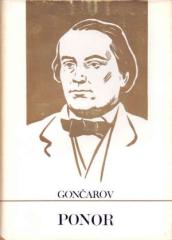
Ponor, sv. 1 – 2

Ponor, sv. 1 – 2

Ivan Gončarov

This two-volume novel follows the life of the main character, a young officer, through various events and challenges.

Veselin Masleša, 1969.
Croatian. Latin alphabet. Hardcover with dust jacket.
The book consists of two volumes
9.36
Čičikovljeve pustolovine ili Mrtve duše

Čičikovljeve pustolovine ili Mrtve duše

Nikolaj Vasiljevič Gogolj

The novel "Dead Souls" was originally conceived as a poem in 3 parts, based on Dante's Divine Comedy divided into three parts: hell, purgatory and paradise, but he wrote only one, published in 1842, and 5 fragments of the second part.

Naprijed, 1960.
Croatian. Latin alphabet. Hardcover with dust jacket.
6.32
Pripovijetke

Pripovijetke

Nikolaj Vasiljevič Gogolj

A classic Croatian edition with a selection of the most famous stories by Gogol - a master storyteller who combines humor, the grotesque, fantasy, and deep social satire.

Kultura, 1950.
Croatian. Latin alphabet. Hardcover.
9.52
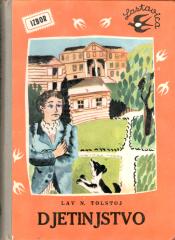
Djetinjstvo

Djetinjstvo

Lav Nikolajevič Tolstoj

Childhood (1852) is the first book of an autobiographical trilogy (with Adolescence and Youth), where Tolstoy explores the world of childhood through the eyes of a ten-year-old boy, Nikolinka Irtenjev – innocence, joys, sorrows and first traumas.

Svjetlost, 1971.
Croatian. Latin alphabet. Hardcover.
6.54
Leopard sa Kilimandžara

Leopard sa Kilimandžara

Olga Larionova

Leopard from Kilimanjaro Set in the not-too-distant future, the plot of the novel tells about the fate of man, faced with the unfathomable questions of death and love.

Jugoslavija, 1978.
Serbian. Latin alphabet. Paperback.
4.50
Poraz

Poraz

Aleksandar Fadeev
Jugoslavijapublik, 1980.
Croatian. Latin alphabet. Hardcover.
4.98