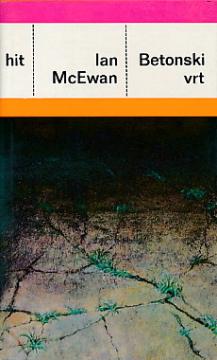
Betonski vrt

Betonski vrt

Ian Mcewan

The Concrete Garden by Ian McEwan is a novel about four children who are left alone after the death of their parents. In isolation, they create their own world, and the boundaries between childhood and adulthood gradually blur.

The Concrete Garden is the first novel by British author Ian McEwan and one of his most famous works. The novel explores themes of growing up, isolation, family relationships, and the psychological consequences of living without adult supervision. Set in a gloomy suburb marked by the demolition of old houses and the spread of concrete surfaces, the novel creates an atmosphere of alienation that strongly influences the behavior of the characters.

The plot centers on four children – Julie, Jack, Sue, and Tom – who are left alone in their family home after the death of their parents. Fearing that social services will separate them, they decide to cover up their mother's death and continue living without adult help. As time passes, the children create their own rules and organize their lives according to their own needs, gradually moving away from social norms.

The narrator Jack describes events from his perspective, revealing the complex emotional and psychological changes that occur in the family. Isolation from the outside world leads to changes in the relationships between the children, and the boundaries between childish and adult behavior become increasingly blurred. The novel shows how lack of authority and social constraints can lead to unexpected and disturbing consequences.

The titular "concrete garden" symbolizes a world without natural development and emotional warmth. The concrete represents the confinement, coldness, and breakdown of traditional family values, as children attempt to create their own space of freedom within such an environment. McEwan explores the darker sides of human nature and the transition from childhood to adulthood through symbolism and psychological analysis.

The novel is characterized by a simple but suggestive style and an atmosphere of tension that lasts until the very end. Due to its provocative themes, psychological depth, and powerful depiction of family relationships, The Concrete Garden is considered one of the most significant novels of contemporary British literature.

Original title
The Cement Garden
Translation
Ivan Matković
Editor
Zlatko Crnković
Graphics design
Alfred Pal
Dimensions
20 x 13 cm
Pages
162
Publisher
Znanje, Zagreb, 1984.
 
Latin alphabet. Hardcover with dust jacket.
Language: Croatian.

One copy is available

Condition:Used, excellent condition
 

Are you interested in another book? You can search the offer using our search engine or browse books by category.

You may also be interested in these titles

Naivci

Naivci

Ivan Kušan

This is a humorous and satirical story about life in a small Dalmatian town, told through the perspective of a naive but insightful narrator.

Znanje, 1975.
Croatian. Latin alphabet. Hardcover with dust jacket.
3.64
Sva moja braća

Sva moja braća

Milo Dor

The book follows the turbulent life of the Zanović brothers from Budva in the 18th century, famous for their adventures at European courts. The focus is on Stjepan Zanović, a charismatic but controversial figure, a Freemason and friend of Casanova, and th

Znanje, 1987.
Croatian. Latin alphabet. Hardcover with dust jacket.
4.28
Amandino vjenčanje

Amandino vjenčanje

Jenny Colgan

A romantic comedy about friendship, love, and the chaotic attempts to save a good man from a bad marriage. A chick-lit hit, it reminds us that friendship saves more than any plan, and love comes unexpectedly.

Znanje, 2001.
Croatian. Latin alphabet. Paperback.
5.36
Prestolonasljednik

Prestolonasljednik

Jaroslav Boček

It is a historical novel that follows the life of Rudolf of Habsburg, later Emperor Rudolf II. The story takes place in the 16th century, during a time of religious and political tensions between Catholicism and Protestantism in the Austro-Hungarian lands

Znanje, 1990.
Croatian. Latin alphabet. Hardcover with dust jacket.
4.98 - 5.38
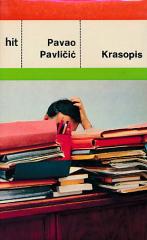
Krasopis

Krasopis

Pavao Pavličić

What happens when the writer himself is the protagonist of his novel and writes it in the first person? The answer to this question can be obtained by reading the novel "Krasopis".

Znanje, 1987.
Croatian. Latin alphabet. Hardcover with dust jacket.
4.36 - 4.42
Goli kruh

Goli kruh

Mohamed Choukri

Mohamed Choukri's novel Bare Bread is a powerful autobiographical story about poverty, hunger and the struggle for dignity in Morocco in the mid-20th century.

Znanje, 1988.
Croatian. Latin alphabet. Hardcover with dust jacket.
3.64