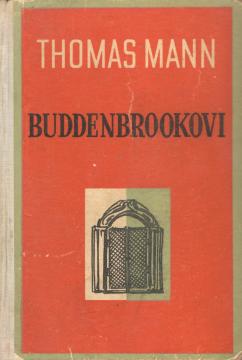
Buddenbrookovi: Propadanje jedne obitelji
Thomas Mann's first novel, published in 1901 when the author was only 26 years old. The work immediately brought the young writer worldwide fame and contributed significantly to his Nobel Prize for Literature in 1929.
The novel is considered one of the most important German novels of the 20th century and a classic of the family saga. The plot follows four generations of the Buddenbrook family, wealthy grain merchants from the Hanseatic city of Lübeck, from 1835 to 1877. The novel begins at the time of the family's greatest prosperity – moving into a new, representative house on Mengstrasse – and ends with its complete dissolution: financial collapse, the sale of the company and house, and the death of the last heir, the sensitive boy Hanno.
Mann masterfully depicts the gradual decline of the family through the conflict between bourgeois duty, tradition, and business success on the one hand, and individual desires, artistic sensibilities, illness, and decadence on the other. The key characters are:
- Old Johann Buddenbrook (patriarch)
- Consul Jean Buddenbrook
- Thomas Buddenbrook (ambitious but increasingly insecure company leader)
- Tony (Antonie) Buddenbrook (whose three failed marriages symbolize the sacrifice of personal happiness for the family)
- Christian (a frivolous bohemian)
- Hanno (the last, musically gifted heir)
The novel is extremely rich in realism: it describes in detail the daily life of the Hanseatic bourgeoisie, family dinners, marriages, business decisions, fashion, food and social norms. At the same time, it announces modernism through the psychological depth of the characters, the motif of decay and the influences of Schopenhauer and Nietzsche. Mann shows how bourgeois solidity and vitality turn into fatigue, illness and the aestheticization of life.
The Buddenbrooks are partly autobiographical – inspired by Mann's own family in Lübeck. The work is a universal story about the transience of wealth, power, and tradition in the face of the onslaught of modernity, industrialization, and new social values. It is considered a masterpiece of European realism with the transition to the modern era and one of the most widely read classics of world literature.
One copy is available
- The cover is missing
- Damaged back