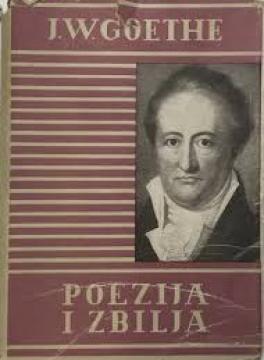
Poezija i zbilja
Rare book

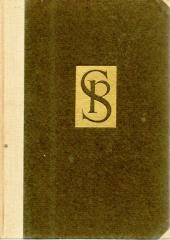
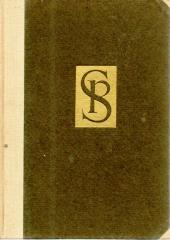
Poezija i zbilja

Johann Wolfgang Goethe

Goethe's greatest autobiographical prose, written between 1811 and 1833, covers his life from his birth in 1749 in Frankfurt to 1775, when he went to Weimar at the invitation of Duke Karl August.

The work is divided into four parts (each with five books), a total of 20 books – not a strictly chronological diary, but an artistically designed "history of formation" (Bildungsgeschichte) of a personality and an era.

The title "Dichtung und Wahrheit" emphasizes the duality: poetry (artistic selection, stylization, partial fiction for greater truthfulness) and reality (historical facts, real events). Goethe does not record everything, but selects what reveals his development – ​​from childhood in a bourgeois family, through law studies in Leipzig and Strasbourg, to stormy loves and literary flowering.

Key motifs:

  • Childhood and family: strict father Johann Caspar, mother Catharina Elisabeth, sister Cornelia; influence of the Frankfurt patrician environment.
  • Studies and travels: Leipzig (love for Käthchen Schönkopf), Strasbourg (meeting with Herder, crucial for Sturm und Drang; love for Friederike Brion in Sesenheim – an idealized idyll).
  • Loves: the three great ones – Käthchen, Friederike, Lili Schönemann (engagement broken off).
  • Literary development: the influence of Rousseau, Shakespeare, antiquity; the emergence of Götz von Berlichingen and The Sorrows of Young Werther.
  • Historical context: The Seven Years' War, the French occupation, social changes.

Goethe presents himself as a child of the epoch – shaped by history, nature and art. The work is not a confession of sin, but a synthesis of the personal and the universal: "Truth" is a higher, artistically refined reality that shows how genius is born from time.

This masterpiece of German autobiography influenced the whole of European literature – from the Romantics to the Modernists. Ideal for understanding Goethe's genius: "Everything is the result of my life, and individual events only serve to confirm a higher truth."

Original title
Aus meinem Leben: Dichtung und Wahrheit
Translation
Zdenko Škreb
Graphics design
Valerija Pavić
Dimensions
20 x 14 cm
Pages
720
Publisher
Matica hrvatska, Zagreb, 1953.
 
Latin alphabet. Hardcover with dust jacket.
Language: Croatian.

One copy is available

Condition:Used, very good condition
Damages or inconvenience notice:
  • The cover is missing
 

Are you interested in another book? You can search the offer using our search engine or browse books by category.

You may also be interested in these titles

Pesme

Pesme

Johann Wolfgang Goethe
Izdavačko preduzeće "Rad", 1964.
Serbian. Latin alphabet. Paperback.
2.50 - 2.52
Egmont : tragedija u pet činova

Egmont : tragedija u pet činova

Johann Wolfgang Goethe
Matica hrvatska, 1942.
Croatian. Latin alphabet. Hardcover.
15.42
Jadi mladoga Vertera

Jadi mladoga Vertera

Goethe's masterpiece of an epistolary novel from 1774 (revised in 1787), pivotal to the Sturm und Drang movement, caused a cultural upheaval in Europe – a wave of suicides, "Wertherism" and the imitation of heroes in fashion and sentiment.

Nolit, 1966.
Serbian. Latin alphabet. Hardcover.
4.88
Biljke učiteljice: jedan put izlječenja - pusti da se dogodi

Biljke učiteljice: jedan put izlječenja - pusti da se dogodi

Josep Vila i Tronchoni

Since Castaneda's books written more than forty years ago, no story has appeared that introduces us to the shamanic world with such power and truth as this book.

Sipar, 2013.
Croatian. Latin alphabet. Paperback.
12.54
Moj Argentinski Tango - ispovest Mornara Pešića

Moj Argentinski Tango - ispovest Mornara Pešića

Predrag Aleksijević

The book is an authentic, poignant, and humorous confession of the Belgrade sailor and bohemian Milorad Mornar Pešić (1934–2018), which Predrag Aleksijević wrote down and shaped into a confessional novel.

NIRO Exportpress, 1984.
Serbian. Latin alphabet. Paperback with dust jacket.
5.26
Pismo nerođenom djetetu

Pismo nerođenom djetetu

Oriana Fallaci

One of the most moving and courageous works of world literature of the 20th century. Written as a long monologue by a pregnant woman (Fallaci herself), the book is at once an intimate confession, a feminist manifesto, and a philosophical confrontation wit

Znanje, 2009.
Croatian. Latin alphabet. Paperback.
4.56