Sjeme smrti

Sjeme smrti

Dževad Karahasan

The first book of a multi-volume novel about Omar Khayyam, the great Persian mathematician, astronomer, and poet from the 12th century.

The novel provides a precise picture of the dramatic era in which Khayyam lives – the collapse of the Arab Empire, the appearance of the Crusaders and the West on the historical stage, the encounters of great cultures, the appearance of steppe peoples who bring “fresh blood” into Islamic societies, where they appear mainly as conquerors, only to relatively quickly cultivate and immerse themselves in the culture they “conquered”.

In the foreground of the novel’s plot stands the figure of Omar Khayyam, surrounded by a series of famous historical figures from his era. Just as these historical figures enable the novel to thematize everything that was conceived in the era being discussed (terrorism, fundamentalism, attempts to realize communist ideas in the form of a state) so that it still accompanies us today as the cultural and political reality of the era in which we live, fictional characters provide insight into the intimate life of the hero.

Khayyam knows an awful lot and is constantly learning, but it is precisely his immense knowledge that forces him to see that a person cannot acquire reliable knowledge; Opposite him stand his contemporaries, who, presumably because they live in times of great upheaval and destruction, construct a single solid point in their minds – their fundamentalist faith in something, from which they then draw the illusion of security in a time of general uncertainty.

Editor
Velimir Visković
Illustrations
Vladimir Tarnovski
Dimensions
20.5 x 14.5 cm
Pages
175
Publisher
Profil Knjiga, Zagreb, 2012.
 
Latin alphabet. Paperback.
Language: Croatian.
ISBN
978-9-53313-093-4

No copies available

The last copy was sold recently.


Are you interested in another book? You can search the offer using our search engine or browse books by category.

You may also be interested in these titles

Sara i Serafina

Sara i Serafina

Dževad Karahasan

The novel Sara and Serafina has so far been translated into German, Swedish, Spanish and Slovenian, and the literary editorial office of the famous Zidojče Zeitung included it among the 50 best contemporary world novels.

Durieux, 1999.
Croatian. Latin alphabet. Paperback.
6.36
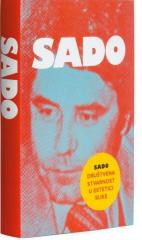
Sado: Društvena stvarnost u estetici slike

Sado: Društvena stvarnost u estetici slike

Senadin Musabegović, Mile Stojić, Predrag Finci, Dževad Karahasan, Jovan Divjak, Ugo Vlaisavljević

The collection brings together papers from a scientific conference dedicated to the work of Prof. Sadudin Musabegović, a prominent aesthetician and art theorist. Through various approaches, the authors explore the relationship between art, painting, socie

Centar za inteerdisciplinarne studije "Prof. dr. Zdravko Grebo", 2022.
Croatian. Latin alphabet. Hardcover with dust jacket.
14.26
Čudesni oblaci

Čudesni oblaci

Françoise Sagan

In the novel "Miraculous Clouds" we meet a young woman, Josee, who vainly resists her husband's sick jealousy and her insatiable passion.

Svjetlost, 1963.
Croatian. Latin alphabet. Paperback.
4.22
Starac u kutu

Starac u kutu

Barunica Emma Orczy
Europapress holding, 2009.
Croatian. Latin alphabet. Paperback.
1.98
Posljednji Stipančići

Posljednji Stipančići

Vjenceslav Novak

The novel The Last Stipančići is set in the first decade of the 19th century. It is focused on the decline of a patrician family and goes far into the past, into the last two generations of this family.

Branko Đonović, 1963.
Serbian. Latin alphabet. Hardcover.
4.88
Prolećne vode

Prolećne vode

Ivan Sergejevič Turgenjev

During his stay in Mainz, the young Russian nobleman Sanjin meets the beautiful Italian Gemma, with whom he falls in love.

Svjetlost, 1963.
Croatian. Latin alphabet. Paperback.
3.26 - 4.12