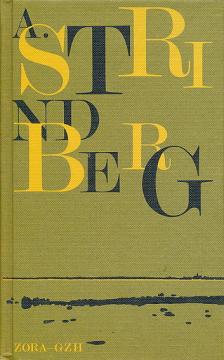
Inferno / Okultni dnevnik : brak s Harrietom Bosse

Inferno / Okultni dnevnik : brak s Harrietom Bosse

August Strindberg

The so-called Occult Diary occupies a special place in Strindberg's literary legacy. Nothing can be compared to it.

The Occult Diary begins on February 21, 1896, when Strindberg's great inferno-crisis was approaching its climax. A short time before that, he settled in the famous "Orfila" hotel in Paris. "Since that time...", he writes in Inferno, "I noticed a series of revelations, which I could not explain to myself without resorting to the existence of unknown forces." Since then, I've been writing notes, which gradually pile up and form a diary."

From the beginning, he contented himself with recording "unusual cases" in a concise form, strange events and details in which he himself saw miracles or signs, messages from forces. These early notes soon formed the first draft material for both of his confessions, Inferno and Legends. However, his notes become intelligible to others only in an expanded, ordered form, which brings his own interpretations of those observations. The notes grow more and more into an extensive confession and are filled with considerations and reflections and his experiences. The "occult" recedes more and more into the background, but still disappears completely. Especially since Harriet Bosse entered his life in 1900, that work became a diary in the usual sense of the word. Harriet and his relationship to her come to the fore from then on. After she finally left him and entered into a new marriage, he stops that diary about his life. The last dated note is dated July 11, 1908. On that day, Strindberg leaves the flat in Karlavagen, where he and Harriet Bosse had made their home after their marriage, and moves into his last Blatornet flat, Drottninggatan 85. (From the foreword by Torsten Eklund)

Naslov izvornika
Inferno / Okkultes tagebuch
Prijevod
Marija Čižmek, Ljubica Topić
Urednik
Zvonimir Majdak, Novak Simić
Naslovnica
Svetozar Domić
Dimenzije
20 x 12 cm
Broj strana
292
Nakladnik
Zora, Zagreb, 1977.
 
Latinica. Tvrde korice.
Jezik: Hrvatski.

Nema primjeraka u ponudi

Poslednji primjerak je nedavno prodan.
 

Zanima Vas i neka druga knjiga? Možete pretražiti našu ponudu pomoću tražilice ili prelistati knjige po kategorijama.

Možda će Vas zanimati i ovi naslovi

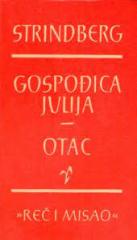
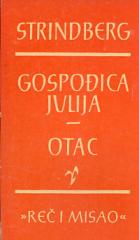
Gospođica Julija, Otac

Gospođica Julija, Otac

August Strindberg
Rad, 1963.
Srpski. Latinica. Broširano.
1,99
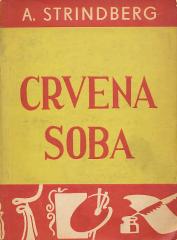
Crvena soba

Crvena soba

August Strindberg
Svjetlost, 1952.
Hrvatski. Latinica. Broširano.
4,98
Gospođa Julija / Otac

Gospođa Julija / Otac

August Strindberg
Izdavačko preduzeće "Rad", 1963.
Srpski. Latinica. Broširano.
2,40
Hrvatsko proljeće

Hrvatsko proljeće

Miko Tripalo

The Croatian Spring is not only a chronicle of the events of 1971, but also a suggestive presentation of the political conditions of Yugoslavia in the post-war period. These testimonies come from the pen of a man who really tried to break the shackles of

Globus, 1990.
Hrvatski. Latinica. Tvrde korice s ovitkom.
11,58
Posljednji kineski car

Posljednji kineski car

Pu Yi

The Last Emperor of China (1988), an autobiography by Pu Yi, follows the life of the last emperor of China. The book, written with the help of ghostwriter Li Wende, depicts Pu Yi's personal reflections and his transformation from divine emperor to ordinar

Otokar Keršovani, 1988.
Hrvatski. Latinica. Broširano.
Knjiga se sastoji od dva toma
9,99
Nevjernica: Moj život

Nevjernica: Moj život

Ayaan Hirsi Ali

Ayaan Hirsi Ali is one of the most admired, but also most contested, political figures of today.

Naklada Ljevak, 2010.
Hrvatski. Latinica. Broširano.
7,98 - 8,14