
Zločin i kazna

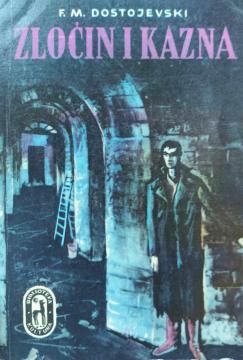
Zločin i kazna

Fjodor Mihajlovič Dostojevski

Rodion Romanovič Raskolnikov is an ambitious law student. Driven by misery and an uncertain future, he decides to kill and rob a hated old woman who exploits people through usury.

Apart from the fact that he plans to solve his own financial and family problems with murder, he also considers it ethically justified, because, in his opinion, the lives of ordinary people who stand in his way are worth nothing compared to the noble ideals he strives for: he believes that he, as an exceptional individual, it is above the moral rules that bind other people. He carefully works out the plan, but still mistakes sneak up on him and attract the suspicion of the police. He himself becomes unsure whether he has acted correctly and whether, after all, he has committed a crime, and he despairs and longs for redemption. In the mental crisis he is going through, he is helped by Sonja Marmeladova, a suffering girl who humbly and passively holds herself against evil and life's adversities, and finds solace in her faith.

Using a criminal story, Dostoevsky composed a classic known to everyone today, in which he presented all the complexity of the individual's relationship to existing laws. Rapid social changes throughout Europe in the 19th century, and especially in Russia, lead to great social injustices. The individual thus found himself in a gap between the law, which protects him, and injustice, and the need to preserve human values. Dostoevsky dedicated his great stories to this.

Titel des Originals
Преступление и наказание
Übersetzung
Milosav Babović
Editor
Miroslav Vitorović, Laza Lazić
Titelseite
D. Ristić
Maße
16,5 x 11,5 cm
Seitenzahl
527
Verlag
Kultura, Beograd, 1963.
 
Latein Schrift. Taschenbuch.
Sprache: Serbisch.

Im Angebot sind keine Exemplare vorhanden

Das letzte Exemplar wurde kürzlich verkauft.


Interessieren Sie sich für ein anderes Buch? Sie können das Angebot über unsere Suchmaschine suchen und finden oder Bücher nach Kategorien durchsuchen.

Diese Titel könnten Sie auch interessieren

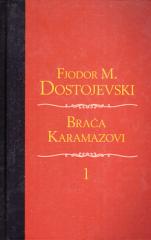
Braća Karamazovi

Braća Karamazovi

Fjodor Mihajlovič Dostojevski

The Brothers Karamazov is the last novel of the Russian genius Fyodor Mikhailovich Dostoyevsky, which he completed less than three months before his death.

Globus, 2004.
Kroatisch. Latein Schrift. Hardcover.
12,38 - 12,56
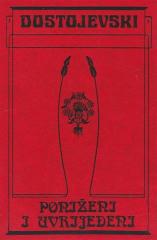
Ujakov san / Poniženi i uvrijeđeni

Ujakov san / Poniženi i uvrijeđeni

Fjodor Mihajlovič Dostojevski

Both works reflect Dostoevsky's early phase, with a focus on social criticism, psychological analysis and moral dilemmas, foreshadowing the themes of his later masterpieces.

Znanje, 1982.
Kroatisch. Latein Schrift. Hardcover.
13,26
Zapisi iz mrtvog doma / Zimske bilješke o ljetnim dojmovima / Zapisi iz podzemlja

Zapisi iz mrtvog doma / Zimske bilješke o ljetnim dojmovima / Zapisi iz podzemlja

Fjodor Mihajlovič Dostojevski

Notes from a Dead Home (1860-1862) - a novel based on the author's imprisonment in Siberia. Winter Notes on Summer Impressions (1863) - an essay from a trip to Europe in 1862. Notes from the Underworld (1864) is a philosophical novel about a man torn by i

Znanje, 1982.
Kroatisch. Latein Schrift. Hardcover.
16,56
Kako smo lomili noge

Kako smo lomili noge

Miro Gavran

The novel How We Broke Our Legs (1997), a humorous and tender chronicle of family life through four decades of Croatian history, follows the fate of three generations of a Slavonian family from 1951 to 1992.

Mozaik knjiga, 2007.
Kroatisch. Latein Schrift. Taschenbuch.
9,36
Pokojni Matija Pascal

Pokojni Matija Pascal

Luigi Pirandello

Luigi Pirandello's novel The Late Matthias Pascal (1904), a masterpiece of Italian literature, explores themes of identity, freedom, and social conventions through a tragic yet ironic story of a man trying to escape his life.

Naprijed, 1962.
Kroatisch. Latein Schrift. Hardcover.
4,50
Peto evanđelje

Peto evanđelje

Mario Pomilio
Kršćanska sadašnjost, 1986.
Kroatisch. Latein Schrift. Fester Einband mit Schutzumschlag.
5,99