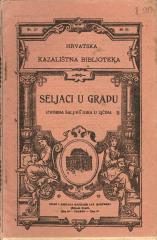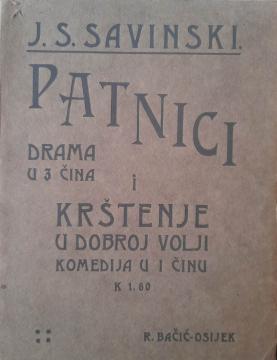
Patnici: drama u 3 čina / Krštenje u dobroj volji: komedija u 1 činu
Two plays by Josip Selak (J. S. Savinski) – a serious portrayal of suffering in three acts and a humorous one-act play about good intentions and intrigue. Works by a lesser-known Croatian playwright and businessman from the early 20th century.
Josip Selak (1868–1950), known by his pen name J. S. Savinski, was a Croatian businessman, publicist and playwright. Born in Rečica ob Savinji (Slovenia), he was educated in Zagreb, and spent most of his life in Croatia as a manager of large estates (especially the Turković estate in Kutjevo). He also worked as a director of a department of the Croatian Discount Bank.
In addition to professional articles on economics, forestry and social issues, he wrote plays between 1900 and 1918, and the youth novel Gojko (1936). His plays have mostly not seen major theatrical performances, but they reflect a realistic view of the life of the "little man", social relations, family conflicts and everyday struggles during the Austro-Hungarian Empire and the early 20th century.
Selak's works belong to the period of Croatian realistic and early modernist drama. As a man with practical experience in managing large estates, the author was well acquainted with social classes, economic relations and human weaknesses, which he incorporated into his texts. Although they did not achieve a great public response, his plays (among which are The Rich, Father and Daughter, Forest Workers) testify to his interest in the theatrical form as a means of social criticism and entertainment.
Together, these two plays offer an insight into Selak's range – from tragic realism to light satire – and reflect the spirit of the times in which the "little man" suffered under the pressure of change, while humor served as a vent.
Jedan primjerak je u ponudi