Rat budućnosti: Znanstvena predviđanja o novom oružju

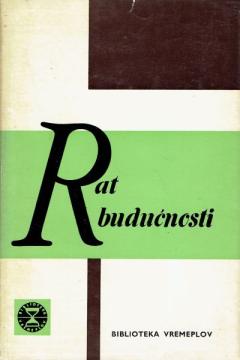
Rat budućnosti: Znanstvena predviđanja o novom oružju

André Beaufre, Vladimir Dedijer, John Cockcroft, David Inglis, Andrew Stratton, Harvey Wheeler, William A. Nierenberg, Marcel Fetizon, Michel Magat, Carl-Göran Hedén, M. W. Thring, Gordon J. F. MacDonald, Otto Klineberg, Philip Noel-Baker, Nigel Calder

A collection of fourteen essays by sixteen distinguished scholars from six countries, predicting the development and threats of new weapons in future wars, especially in the context of the Cold War and technological advances.

Topics include conventional and guerrilla warfare, nuclear weapons, air and space technologies, computer systems, submarine warfare, chemical and microbiological weapons, autonomous weapons, and geophysical warfare. The essay by Gordon J.F. is particularly noteworthy. MacDonald's "How to Wreck the Environment", which warns of the possibility of using technology to manipulate the environment as a weapon.

The authors express concern about the potential destructiveness of new technologies and call for international cooperation and arms control to prevent the escalation of conflicts. The book serves as a warning about the dangers of uncontrolled technological development in a military context.

Original title
Unless Peace Comes: A Scientific Forecast of New Weapons
Translation
Radovan Stipetić
Editor
Nigel Calder
Graphics design
Ferdo Bis
Dimensions
21 x 13.5 cm
Pages
231
Publisher
Stvarnost, Zagreb, 1969.
 
Latin alphabet. Hardcover with dust jacket.
Language: Croatian.

No copies available

The last copy was sold recently.


Are you interested in another book? You can search the offer using our search engine or browse books by category.

You may also be interested in these titles

Nevidljivi neprijatelj na Atlantiku 1-2

Nevidljivi neprijatelj na Atlantiku 1-2

Boris Prikril

The book provides a detailed account of naval conflicts in the Atlantic Ocean during World War II, with particular emphasis on the Battle of the Atlantic Convoy and the activities of German submarines – the so-called "invisible enemy".

Znanje, 1985.
Croatian. Latin alphabet. Hardcover with dust jacket.
The book consists of two volumes
6.985.58
Dizanje prošlosti u vazduh: Ogledi o Balkanu i Istočnoj Evropi

Dizanje prošlosti u vazduh: Ogledi o Balkanu i Istočnoj Evropi

Marija Todorova

A collection of essays by the Bulgarian historian Maria Todorova (known for Imaginary Balkans), compiled especially for the 20th Century Library. Indispensable for understanding post-communist transitions, culture of memory and Balkan studies.

Biblioteka XX vek, 2010.
Serbian. Latin alphabet. Paperback.
8.446.75
Turska noć

Turska noć

Philippe Videlier

The crime against the Armenians is only coming to light today. After almost a century, the tragedy of a nation, the indifference of the Constantinople authorities, the media cover-up and the turning of the international community's head are unfolding befo

Durieux, 2010.
Croatian. Latin alphabet. Hardcover with dust jacket.
11.428.57
Na rubu revolucije - studenti '71.

Na rubu revolucije - studenti '71.

Tihomir Ponoš

This is the first book that comprehensively addresses the phenomenon of Croatian students and their role in the Croatian Spring. Students, along with the reform wing of the League of Communists and Matica Hrvatska, were one of the three pillars of the Cro

Profil International, 2007.
Croatian. Latin alphabet. Paperback.
9.56
O boljševizmu (1920-1921) - zabranjeni Masarik

O boljševizmu (1920-1921) - zabranjeni Masarik

Tomáš G. Masaryk

In this edition, translated by dr. Aleksandar Ilić, there are texts of the first Czechoslovak president in which he timely criticizes Marx, Engels and Lenin, and actually goes on to criticize imperialism in general.

Zavod za udžbenike i nastavna sredstva, 2014.
Serbian. Cyrillic alphabet. Paperback.
9.76
Radni logor Valpovo 1945.-1946.: dokumenti

Radni logor Valpovo 1945.-1946.: dokumenti

Vladimir Geiger

The Valpovo labor camp (1945–1946) was the largest camp for Volksdeutschers in Croatia after World War II. About 4,000 Germans and Austrians were interned; at least 1,074 died, mostly from hunger, disease, and exhausting labor.

Njemačka zajednica podunavskih Švaba u Hrvatskoj, 1999.
Croatian. Latin alphabet. Hardcover.
27.34