Operacija Walküre

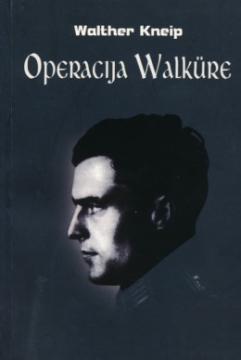
Operacija Walküre

Walther Kneip

The attempt to assassinate Adolf Hitler in 1944 in today's Germany is not exactly celebrated, regardless of the thousands executed, nor is the heroic undertaking of the one-armed war veteran Claus von Stauffenberg particularly glorified.

He was the only one of the anti-Hitler conspirators who found enough courage and inner strength to bring explosives into the Wolf's Den. For him, the solution was to kill the Führer, and only then start Operation Walküre, launch Wehrmacht units that would deal with the SS and occupy Berlin, Munich, Cologne and Vienna. The crazy idea of ​​an Anglo-American air landing on Berlin was also discussed, after which German soldiers would deal with Nazi units side by side with American and British paratroopers, and then the German army would conclude an armistice in the west and prolong the war against the Soviet Union. As tempting as this may sound, the overheated German war machine could not simply stop or spare the consequences of total defeat on all fronts, as well as the demand for unconditional capitulation sent from the meeting of the Big Three in Tehran. Colonel Count Stauffenberg, a descendant of the old Prussian military nobility, appeared not as the conscience of the nation, but only as the conscience of a small group of like-minded people, so most of their German contemporaries considered them traitors. Loyalty to the Führer was equated with loyalty to Germany - whoever was against Hitler was also against Germany. Of course, after the war, it will be argued that there were many who thought like Stauffenberg, but that they did not have the opportunity to express it. However, the Führer did not fight his war alone, and only one German tried to stop him.

Naslov originala
Unternehmen ''Walküre''
Prevod
Aleksandar Vojinović
Urednik
Krešimir Maligec
Dimenzije
20 x 14 cm
Broj strana
221
Izdavač
Zagrebačka naklada, Zagreb, 2008.
 
Latinica. Broširano.
Jezik: Hrvatski.
ISBN
385-0-10000-300-8

Jedan primerak je u ponudi

Stanje:Korišćeno, u odličnom stanju
Dodato u korpu!
 

Zanima Vas i neka druga knjiga? Možete pretražiti našu ponudu pomoću pretrage ili prelistati knjige po kategorijama.

Možda će Vas zanimati i ovi naslovi

Jevreji u Jugoslaviji 1944–1952: Kraj ili novi početak

Jevreji u Jugoslaviji 1944–1952: Kraj ili novi početak

Mladenka Ivanković

Jews in Yugoslavia 1944–1952 by Mladenka Ivanković depicts the renewal of the life of the Jewish community after the Holocaust, its relationship with the new authorities, and emigration to Israel and the preservation of identity.

Institut za noviju istoriju Srbije, 2009.
Srpski. Latinica. Tvrde korice.
36,42
Hrvatska u arhivima izbjegličke vlade 1941-1943.: Izvještaji informatora o prilikama u Hrvatskoj

Hrvatska u arhivima izbjegličke vlade 1941-1943.: Izvještaji informatora o prilikama u Hrvatskoj

Ljubo Boban

Akademiker Ljubo Boban in seinem Werk „Kroatien im Archiv der Exilregierung 1941–1943“. bringt eine Sammlung diplomatischer Berichte aus verschiedenen europäischen und internationalen Vertretungen der jugoslawischen Exilregierung während des Zweiten Weltk

Globus, 1985.
Hrvatski. Latinica. Tvrde korice s omotom.
9,527,14
"Enigma" do pobjede

"Enigma" do pobjede

Ilija Marinković

Die Geschichte dreier polnischer Mathematiker, die in den 1930er Jahren die deutsche Enigma-Chiffriermaschine knackten. Ihre geheime Arbeit ermöglichte es den Alliierten, während des Krieges Nazi-Nachrichten zu lesen, wodurch der Krieg um Jahre verkürzt u

Vjesnik, 1977.
Hrvatski. Latinica. Tvrde korice.
6,324,74
Mladi lavovi

Mladi lavovi

Irwin Shaw

„Mladi lavovi“ je debitantski roman američkog pisca Irvina Šoa iz 1948. godine. inspirisan njegovim iskustvima u američkoj vojsci tokom Drugog svetskog rata.

Zora, 1965.
Hrvatski. Latinica. Tvrde korice s omotom.
6,58
Dvoboj orlova

Dvoboj orlova

Peter Townsend

O istoriji Drugog svetskog rata pisano je mnogo i postoji bezbroj pogleda i tumačenja pojedinih etapa rata.

Izdavački zavod Jugoslavija, 1979.
Srpski. Latinica. Tvrde korice s omotom.
12,98
Bitka za Moskvu

Bitka za Moskvu

Branko Kitanović

Bitka za Moskvu je istorijski prikaz nemačke operacije „Barbarosa“, sovjetske odbrane i kontraofanzive 1941. godine. Autor, uz svedočenja najviših sovjetskih vojnih vođa, prikazuje kako se odvijao prvi nemački poraz u ratu.

Alfa, 1975.
Hrvatski. Latinica. Tvrde korice s omotom.
7,96