Nana

Nana

Émile Zola

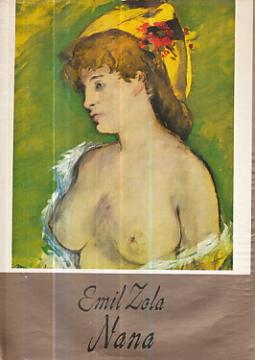
The novel "Nana" by Emil Zola is a story about false love, about feigned passion and lust, greed and all emotions related to possessing material things. Everything is embodied in the figure of a woman, possessed of all the vices that society condemns.

In the character of Nana, the power and weight of money, as well as the position that can be bought, are faithfully depicted. The material things that Nana is obsessed with elevate her into a society she does not belong to, which is the realization of her raw soul.

Nana exudes sensuality, power over the opposite sex, an attraction that she uses abundantly to achieve her goal, wealth and glamour, regardless of the price. Nana is a devourer of men, regardless of their age. The weight of their money is important. Human moral qualities lose their significance when they come into contact with Nana. She uses them all to satisfy her personal ego, as long as she can afford it financially.

Prevod
Ivan Dimitrijević, Milan Šare
Urednik
Milivoje Marković
Naslovnica
Hašim Kablarević
Dimenzije
20 x 14,5 cm
Broj strana
428
Izdavač
Minerva, Subotica, 1984.
 
Tiraž: 10.000 primeraka
 
Latinica. Tvrde korice s omotom.
Jezik: Srpski.

Jedan primerak je u ponudi

Stanje:Korišćeno, u odličnom stanju
Oštećenja / nepogodnosti:
  • Traces of patina
Dodato u korpu!
 

Zanima Vas i neka druga knjiga? Možete pretražiti našu ponudu pomoću pretrage ili prelistati knjige po kategorijama.

Možda će Vas zanimati i ovi naslovi

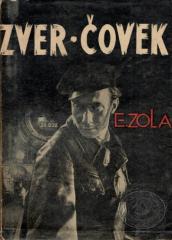
Zver-čovek

Zver-čovek

Émile Zola

The novel explores the destructive forces of inheritance, passion, and violence in modern industrial society. The action takes place largely on the railroad, a symbol of speed, destiny, and inevitable doom. “Beast Man” is the first description of crime in

Nolit, 1940.
Srpski. Latinica. Broširano s omotom.
56,32
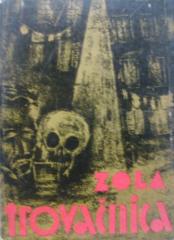
Trovačnica

Trovačnica

Émile Zola

The novel The Poisoner was published in sequels during 1876, and in book form in 1877. It is the story of a woman's struggle for happiness in the working class of Paris.

Rad, 1955.
Srpski. Latinica. Tvrde korice s omotom.
8,627,49 - 9,998,62
Stranica ljubavi

Stranica ljubavi

Émile Zola
Rad, 1974.
Srpski. Latinica. Tvrde korice.
5,84
Deobe

Deobe

Dobrica Ćosić

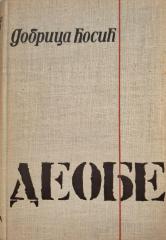
Deobe is a novel about the tragic division of Serbs into Chetniks and Partisans during World War II. Winner of the NIN Award, it is part of a wider epic trilogy, inspired by Ćosić's experiences and historical documents.

Prosveta, 1963.
Hrvatski. Latinica. Tvrde korice s omotom.
13,74
Zagrepčanka

Zagrepčanka

Branislav Glumac

Branislav Glumac published a novel without periods or commas in 1974, as the relentless stream of thought of a young rebel. Published in socialist Yugoslavia, the work caused a scandal with its openness and became a classic about generational rebellion.

IROS, 1986.
Hrvatski. Latinica. Tvrde korice.
8,24
Stotina godina (antikronika)

Stotina godina (antikronika)

Dario Harjaček

The novel One Hundred Years by Dario Harjaček provides a panoramic view of Trešnjevka and its inhabitants through a century of changes, ideologies, and human destinies – a mosaic of Zagreb in which life, art, and history intertwine.

Oceanmore, 2025.
Hrvatski. Latinica. Broširano.
13,42