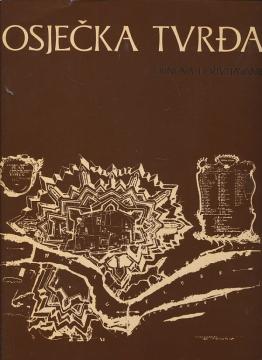
Osječka Tvrđa - Plan obnove i oživljavanja

Osječka Tvrđa - Plan obnove i oživljavanja

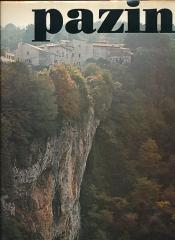
This book focuses on the restoration and revitalization plan of the Osijek Fortress, an important historical and architectural site in Osijek.

Osječka Tvrđa is a baroque military fort from the 18th century, located on the right bank of the Drava River. Construction began in 1712 under the supervision of Prince Eugene of Savoy, and was mostly completed by 1722.

After the liberation of Osijek from Ottoman rule in 1687, the Austrian military authorities decided to build a new fortress at the strategically important crossing over the Drava1. The fortress was built on the model of Dutch lowland fortifications, and was designed by Mathias von Kaiserfeld and Maximilian Gosseau de Henef.

The fortress was a multi-ethnic town in the 18th and 19th centuries, where local residents and immigrants from various parts of Europe lived, including Styria, Carniola, Bavaria, Italy, France and others1. The official languages ​​were Latin and German, but other languages ​​such as Modern Greek, Italian and French were also spoken.

Today, the Fortress is known for its Baroque buildings, including churches, museums, schools and other public buildings. Although many of the fortifications were removed in the 1920s, the inner core of the fortress remained preserved.

Editor
Radovan Miščević
Illustrations
Zvonimir Barbarić, Jovan Gojković, Rudolf Bartolović
Graphics design
Zdravko Beretin, Radovan Miščević, Mirjana Petković
Dimensions
32 x 23 cm
Pages
105
Publisher
Urbanistički institut SR Hrvatske, Zagreb, 1976.
 
Latin alphabet. Paperback.
Language: Croatian.

One copy is available

Condition:Used, excellent condition
 

Are you interested in another book? You can search the offer using our search engine or browse books by category.

You may also be interested in these titles

Što smo mu učinili

Što smo mu učinili

Nenad Ivanković

The book What We Did to Him by journalist and publicist Nenad Ivanković presents a personal and political reflection on the circumstances of the arrest, trial, and verdict of Generals Ante Gotovina and Mladen Markač before the Hague Tribunal.

Vlastita naklada, 2011.
Croatian. Latin alphabet. Paperback.
8.76
Hrvatsko domobranstvo u Drugom svjetskom ratu

Hrvatsko domobranstvo u Drugom svjetskom ratu

Ivan Košutić

The book provides a detailed account of the development, organization, and operations of the Croatian Home Guard, the regular army of the Independent State of Croatia (NDH), in the period from 1941 to 1945.

Nakladni zavod Matice hrvatske, 1992.
Croatian. Latin alphabet. Hardcover with dust jacket.
11.56
Slaveni u davnini

Slaveni u davnini

Toma Maretić
Matica hrvatska, 1889.
Croatian. Latin alphabet. Hardcover.
39.99
U Titovim pandžama (Svjedočanstva)

U Titovim pandžama (Svjedočanstva)

Vladislav Musa

The content of the book is real and experienced in the enslaved homeland, in the dictatorship and Tito's prisons.

Vlastita naklada, 1973.
Croatian. Latin alphabet. Paperback.
27.36
Glazbeni život u Kaštelima od 1860. do 1918. godine

Glazbeni život u Kaštelima od 1860. do 1918. godine

Vladan Vuletin

The author traces the development of music in Kaštela from the 19th century to the present day. He pays special attention to the time of the founding of the first musical societies, church choirs and school ensembles.

Matica hrvatska, 2012.
Croatian. Latin alphabet. Hardcover.
18.98
Numizmatička povijest Rijeke

Numizmatička povijest Rijeke

Bože Mimica

This book covers the coins that circulated in the Rijeka area over a period of twenty-five centuries. Each period, from antiquity to 1918, is accompanied by a brief historical overview of Rijeka.

Povijesno društvo, 1997.
Croatian. Latin alphabet. Paperback.
17.9814.38