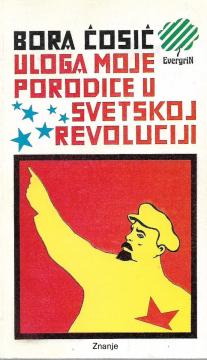
Uloga moje porodice u svetskoj revoluciji
Dečak Bora priča priču o haotičnoj porodici u Beogradu tokom rata i posleratne revolucije. Mama, tata, deda, ujak i tetke žive apsurdnu svakodnevicu punu smeha, haosa i ironije, dok „svetska revolucija“ ulazi u njihov stan i menja im živote.
Uloga moje porodice u svetskoj revoluciji Bore Ćosića (1969) je kratki roman, dobitnik NIN-ove nagrade, i jedno od najvažnijih dela srpske (i jugoslovenske) književnosti druge polovine 20. veka. Napisan je iz perspektive dečaka Bore, što pruža naivnu, jednostavnu, gotovo dnevničku naraciju koja majstorski otkriva apsurdnost velikih istorijskih događaja.
Radnja prati život velike, disfunkcionalne beogradske porodice tokom Drugog svetskog rata i neposredno nakon njega, u vreme uspostavljanja socijalizma. Glavni likovi su: paranoična i neorganizovana mama, alkoholičar tata koji ne može da zadrži posao, deda koji sumnja u sve, ujak (transvestit), dve tetke opsednute holivudskim zvezdama i narator – dečak Bora. Porodica živi u konstantnom haosu: stalno razgovaraju, svađaju se, recituju, crtaju, jedu, plaču i sanjaju. Rat i okupacija su im gotovo sporedni – porodični rituali i sitnice su važniji.
Ćosić domišljato koristi humor i apsurd da kritikuje i demistifikuje velike istorijske događaje. Revolucija ulazi u kuću preko partizana i novih vlasti koje okupiraju stan, propovedaju jednakost, ali donose novu birokratiju, nepravdu i licemerje. Rečenice su kratke, naivne, poput dečjih, ali uglačane do savršenstva – svaka nosi višeslojno značenje. Smeh je oslobađajući, subverzivan i gorak; na kraju dečak shvata da je sve bilo tako ili još gore.
Knjiga je autobiografski porodični ep, ali i oštra satira o komunističkoj revoluciji, mitovima o partizanima i novom društvenom poretku. Pokazuje kako ideologija ulazi u svakodnevicu, menja odnose i pretvara obične ljude u igrače u velikoj predstavi. Stil je inovativan, moderan, pun ironije, inventara predmeta, jezika i ludila epohe.
Roman je dva puta dramatizovan u Ateljeu 212, a po njemu je snimljen film Bate Čengić (1971), koji je ubrzo zabranjen. Danas se smatra obaveznim štivom za razumevanje jugoslovenskog 20. veka – duhovit, bolan i duboko human. Može se čitati na bilo kojoj stranici i uvek donosi osmeh i prepoznavanje.
Dva primerka su u ponudi