Émile Zola
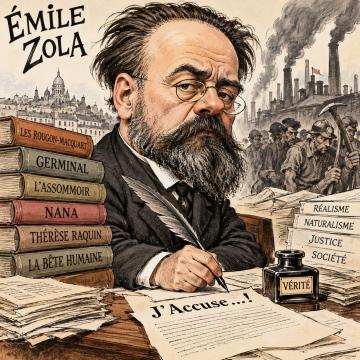
Émile Zola (Paris, April 2, 1840 – Paris, September 29, 1902) was a French writer, journalist, and literary critic, and one of the most significant representatives of naturalism in 19th-century European literature. He grew up in Aix-en-Provence, where he became friends with the painter Paul Cézanne. After his father's death, the family fell into financial hardship. Zola moved to Paris and took a job at the Hachette publishing house, subsequently dedicating himself to literature and journalism.
He began his literary career with the short story collection Stories for Ninon (1864) and attracted public attention with the novel Thérèse Raquin (1867). His most important achievement is the monumental Rougon-Macquart cycle (1871–1893), comprising twenty novels that depict French society during the Second Empire. Among the cycle's best-known works are L'Assommoir (1877), Nana (1880), The Ladies' Paradise (1883), Germinal (1885), The Beast Within (1890), and The Debacle (1892).
In his novels, Zola explored the influence of heredity, social environment, and life circumstances on human behavior. He devoted special attention to poverty, the working class, social injustices, and the moral hypocrisy of the bourgeoisie. He outlined the principles of naturalist poetics in his theoretical work The Experimental Novel (1880).
Following the Rougon-Macquart cycle, he wrote the Three Cities trilogy (1894–1898) and began the Four Gospels cycle. As a socially engaged intellectual, he gained renown for his open letter J’accuse…! (1898), in which he defended the unjustly convicted Alfred Dreyfus and condemned antisemitism. Due to this stance, he was forced to leave France temporarily.
He died in Paris from carbon monoxide poisoning under unexplained circumstances. His remains were transferred to the Panthéon in Paris in 1908. Zola left an indelible mark on world literature by combining the artistic power of the novel with a critical observation of society.
Titel im Angebot
Trovačnica
Roman Trovačnica je objavljen u nastavcima tokom 1876, a u obliku knjige u 1877. To je priča o borbi žene za sreću u radničkoj klasi Pariza.
U ključalom loncu
Glavni lik, Žan Makar, je siromašni radnik koji radi na pariskoj železnici. Kroz njegovu priču, roman istražuje teme društvene nejednakosti, borbe za opstanak i uticaja sredine na pojedinca.
Uspon Rugonovih
Roman se bavi prirodom i društvenom istorijom jedne porodice tokom Drugog carstva. Glavni junaci su članovi porodica Rugon i Makari, a radnja se odvija u Francuskoj.
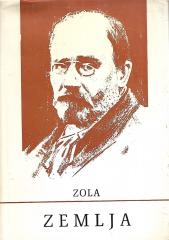
Zemlja
Zemlja je društveni roman objavljen 1887. godine, deo ciklusa „Rugon-Makar“, u kojem Zola prikazuje brutalnu stvarnost života među francuskim seljacima.
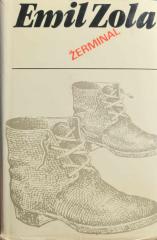
Žerminal
In seinem besten Werk „Germinal“ beschrieb Émile Zola realistisch die unmenschlichen Lebens- und Arbeitsbedingungen der Bergleute im Norden Frankreichs in den 60er Jahren des 19. Jahrhunderts.
Žerminal
In his best work, Germinal, Émile Zola realistically described the inhuman living and working conditions of miners in northern France in the 60s of the 19th century.
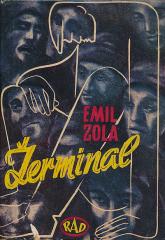
Žerminal
In his best work, Germinal, Émile Zola realistically, in minute detail, described the inhuman living and working conditions of miners in northern France in the 1860s.
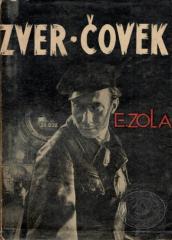
Zver-čovek
The novel explores the destructive forces of inheritance, passion, and violence in modern industrial society. The action takes place largely on the railroad, a symbol of speed, destiny, and inevitable doom. “Beast Man” is the first description of crime in