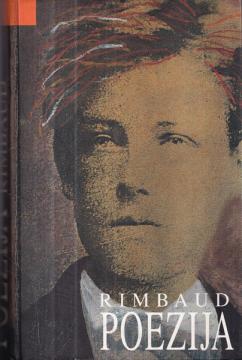
Poezija

Poezija

Arthur Rimbaud

The 'riddle of Rimbaud' was pursued by many: some proclaimed him the god of modern visionary poetry, others saw in him a perverted child and the immature rebellion of a high school student, others christened him a mystic, others treated him as an interest

Rimbaud's poetic reflection and writing are not behind us, perhaps they are just beyond the reach of the typical "horizon of expectations" of contemporary mass culture. They are not only the treasure of a great ancestor of 20th century poetry, stored in the museum of modern literature, but also a warning worthy of the greatest attention. An inspiration at least for those readers and writers of today who do not blindly or opportunistically accept the modern rules of the game. It is true that Rimbaud - the man, after he fell silent, submitted to the rules of the game of his time. But he left him as a pledge a work of irrefutable future charge

"Poetry will no longer rhythm the action, it will take the lead." (A. Rimbaud in a letter to P. Demeny, May 15, 1871)

"What is my nothingness compared to amazement

that awaits you." (A. Rimbaud, Illuminations)

Exalted and denied, for some an icon, for others a psychopath, this cursed poet remains in any case a lyrical phenomenon to whom all modern poetic currents owe a lot. Rimbaud's poetry is presented in a selection and translation by the famous Croatian poet, critic and translator Zvonimir Mrkonjić.

Übersetzung
Zvonimir Mrkonjić
Editor
Nada Gašić
Titelseite
Svjetlan Junaković
Maße
20 x 13 cm
Seitenzahl
353
Verlag
Konzor, Zagreb, 1997.
 
Latein Schrift. Hardcover.
Sprache: Kroatisch.
ISBN
978-9-53631-745-5

Im Angebot sind keine Exemplare vorhanden

Das letzte Exemplar wurde kürzlich verkauft.


Interessieren Sie sich für ein anderes Buch? Sie können das Angebot über unsere Suchmaschine suchen und finden oder Bücher nach Kategorien durchsuchen.

Diese Titel könnten Sie auch interessieren

Kapetan Fracasse

Kapetan Fracasse

Theophile Gautier

A novel by Théophile Gautier, published in 1863. It is an adventure story set in 17th century France, which combines romance, humor and chivalry with elements of theater and social satire.

Grafički zavod Hrvatske (GZH), 1985.
Kroatisch. Latein Schrift. Hardcover.
6,425,14
Seljaci

Seljaci

Honore de Balzac

The novel The Peasants (1844) is a realistic depiction of French rural life in the first half of the 19th century. The book leaves the impression of a tragic struggle between the old order and new social forces, making it a key work of French realism.

Kultura, 1950.
Kroatisch. Latein Schrift. Fester Einband mit Schutzumschlag.
2,99 - 4,32
Stranac

Stranac

Albert Camus

"The Stranger" (1942) by Albert Camus, a classic work of existentialism, follows the life of Meursault, an emotionally indifferent Algerian of French descent, whose apathetic attitude towards the world leads to tragic consequences.

Zora, 1951.
Kroatisch. Latein Schrift. Taschenbuch.
13,46
Moloa

Moloa

Samuel Beckett

The novel Molloy (1951) is the first part of Beckett's famous trilogy, along with Malone Dies and The Nameless. It is structured in two parts, each told from the perspective of a different narrator: first Molloy, then Jacques Moran.

Kosmos, 1959.
Serbisch. Latein Schrift. Hardcover.
8,46
Čovek od gipsa

Čovek od gipsa

Joseph Kessel

The novel, whose original title is L'Homme de plâtre, explores complex human destinies through the story of a protagonist whose life symbolically reflects fragility and vulnerability, like plaster.

Minerva, 1987.
Serbisch. Latein Schrift. Hardcover.
4,64
Eugenija Grande

Eugenija Grande

Honore de Balzac

"Eugénie Grandet" (1833), part of Balzac's Human Comedy, is a realistic novel that explores greed, family relationships, and the sacrifices of love in provincial French society.

Svjetlost, 1970.
Kroatisch. Latein Schrift. Hardcover.
4,99 - 5,00