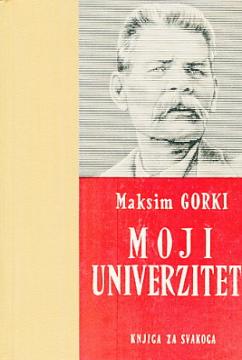
Moji univerziteti

Moji univerziteti

Maksim Gorki

Autobiographical trilogy - Childhood, In the world, My universities. Judging by some of his letters and works, Gorki conceived this trilogy as early as 1893 and wrote it from 1913 to 1923.

My Universities is the third part of Maxim Gorky's autobiographical trilogy, published in 1923 (Serbian edition 1962). The book follows the life of young Alexei Peshkov (Gorky) in the period when he leaves his hometown of Nizhny Novgorod and goes to Kazan with the hope of entering the university. However, faced with financial difficulties and the impossibility of formal education, Aleksey realizes that his real "universities" are life lessons acquired through work, meetings with different people and independent study.

In Kazan, Alexey works various physical jobs, from porter to baker's assistant, while living in poor conditions, surrounded by marginals, workers and intellectuals. The book describes his acquaintance with revolutionary ideas, literature and philosophy, which shape his worldview. Key characters, such as workers, beggars and intellectuals, teach him about social injustices, but also about the strength of the human spirit. A particularly important role is played by the bookstore where Aleksey discovers books, which become his main source of knowledge.

Gorky explores themes of poverty, the search for meaning, and the conflict between individual aspirations and the harsh reality of tsarist Russia. The book is imbued with his struggle against despair, including a moment when he contemplates suicide, but also with his optimism and faith in human resilience. The title "My universities" symbolically emphasizes that real education comes from life experience, not only from formal institutions.

The book is written in a realistic style, with rich descriptions and deep psychological insights, which makes it a powerful account of personal maturation and social conditions of that era.

Urednik
Dragan Jeremić
Naslovnica
Ljubomir Pavićević Fis
Dimenzije
17 x 12 cm
Broj strana
171
Nakladnik
Branko Đonović, Beograd, 1963.
 
Tiraž: 8.000 primjeraka
 
Latinica. Tvrde korice.
Jezik: Srpski.

Jedan primjerak je u ponudi

Stanje:Korišteno, u odličnom stanju
Oštećenja / nepogodnosti:
  • Traces of patina
Dodano u košaricu!
 

Zanima Vas i neka druga knjiga? Možete pretražiti našu ponudu pomoću tražilice ili prelistati knjige po kategorijama.

Možda će Vas zanimati i ovi naslovi

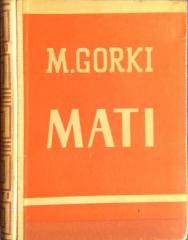
Mati

Mati

Maksim Gorki

Maxim Gorkis Roman „Mutter“ erschien 1906 und ist eines der Schlüsselwerke des russischen Sozialrealismus. Das Werk schildert das Erwachen der Arbeiterklasse in Russland anhand von Charakteren und Ereignissen, die soziale Ungerechtigkeiten und die Notwend

Glas rada, 1950.
Hrvatski. Latinica. Tvrde korice s ovitkom.
4,36 €
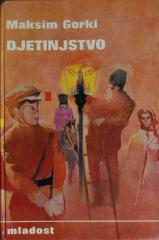
Djetinjstvo

Djetinjstvo

Maksim Gorki
Mladost, 1982.
Hrvatski. Latinica. Tvrde korice.
2,99 €
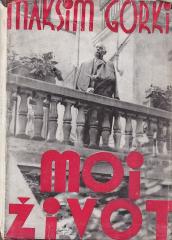
Moj život

Moj život

Maksim Gorki
Naklada Binoza, 1932.
Hrvatski. Latinica. Tvrde korice s ovitkom.
6,99 €
Luka ali ne apostol

Luka ali ne apostol

Mirjana Matić Halle

A psychological novel about the fate of a man who, despite his name as Evangelist, remains an ordinary, imperfect man. The author analyzes his inner moral downfalls, illusions, quests, and the tragedy of everyday life.

Zora, 1974.
Hrvatski. Latinica. Tvrde korice s ovitkom.
3,00 - 6,42 €
Ljuljaška

Ljuljaška

Vojislav Lubarda

Vojislav Lubarda's debut novel, Swing, explores the moral lapses, alienation, and uncertain fate of the individual in post-war society through a psychologically nuanced story about war trauma and ideological conflicts.

Progres, 1963.
Srpski. Latinica. Broširano.
7,34 €
U ime kapitala

U ime kapitala

Paula Rem

„Im Namen des Kapitals“ (2021) von Paula Rem ist ein dystopischer und gesellschaftskritischer Roman. Anhand einer dynamischen Handlung untersucht er die Auswirkungen von Konzernmacht, Konsumdenken und dem Verlust der Menschlichkeit in der modernen Welt.

MeandarMedia, 2021.
Hrvatski. Latinica. Broširano.
13,98 €