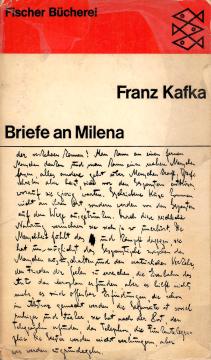
Briefe an Milena

Briefe an Milena

Franz Kafka

Briefe an Milena brings together Kafka's letters to Milena Jesenska, born of an intense spiritual and emotional closeness. The book reveals a love imbued with longing, fear, illness, and the impossibility of living together.

Kafka's Briefe an Milena is one of the most intimate and moving testimonies about his private life. They are letters addressed to Milena Jesenská, a Czech journalist, writer and translator who was among the first to translate Kafka into Czech. Their relationship began in 1920, when Milena contacted him about translating his texts, and it quickly developed into a strong, complex and deeply ambivalent relationship.

These letters are not only a love correspondence but also a record of the meeting of two extremely sensitive and intellectually strong people. Kafka shows himself more vulnerable in them than anywhere else: he is gentle, obsessively introspective, full of desire for closeness, but also paralyzed by the fear of a real relationship. Milena was extremely important to him because he experienced her as a person who truly understands him - a rarity in his life. However, the relationship was burdened by distance, her marriage, his illness, anxiety, and a deep sense of her own non-belonging.

The interesting thing about this book is that Milena was not only the recipient of Kafka's love, but also a key mediator of Kafka's work. Their correspondence reveals how literature, eros, fear, and loneliness were inseparable in Kafka. This is why this book is valuable both as a biographical document and as an extraordinary read about a love that was real, powerful, and almost impossible in advance.

Dimenzije
18 x 10,5 cm
Broj strana
220
Nakladnik
Fischer Bücherei / Fischer Taschenbuch Verlag, Frankfurt am Main, 1966.
 
Latinica. Broširano.
Jezik: Njemački.

Jedan primjerak je u ponudi

Stanje:Korišteno, u vrlo dobrom stanju
Dodano u košaricu!
 

Zanima Vas i neka druga knjiga? Možete pretražiti našu ponudu pomoću tražilice ili prelistati knjige po kategorijama.

Možda će Vas zanimati i ovi naslovi

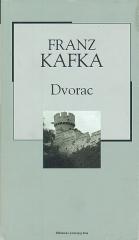
Dvorac

Dvorac

Franz Kafka

The Castle is Franz Kafka's last novel. In it, the protagonist known only as "K." he arrives in the village and struggles to gain access to the mysterious authorities who rule it from a castle supposedly owned by Count Westwest.

Jutarnji list, 2004.
Hrvatski. Latinica. Tvrde korice s ovitkom.
4,99 - 5,22
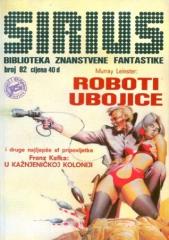
Sirius #82: Biblioteka znanstvene fantastike

Sirius #82: Biblioteka znanstvene fantastike

Murray Leinster, Damir Bajs, Miroslav Bošnjaković, Rastislav Durman, Krunoslav Gernhard, Jakob Z....

Sirius was a Croatian science fiction magazine. The foundation was proposed by Damir Mikuličić in 1976. In Sirius, the works of domestic authors, as well as translations of foreign SF authors, were published. It was published from 1976 to 1989.

Vjesnik, 1983.
Hrvatski. Latinica. Broširano.
2,00
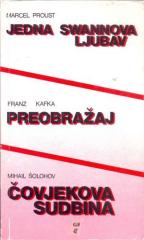
Jedna Swannova ljubav / Preobražaj / Čovjekova sudbina

Jedna Swannova ljubav / Preobražaj / Čovjekova sudbina

Marcel Proust, Franz Kafka, Mihail Šolohov

The selection of titles of selected high school reading offered in this way is threefold in its thematic focus, which is seen in Proust in the old world, in Sholokhov in the new life, and in Kafka in the unreliable sign of man.

Stvarnost, 1989.
Hrvatski. Latinica. Broširano.
8,74
Kako stoje stvari: Predavanje održano u Domu JNA u Zagrebu 17. 12. 1952.

Kako stoje stvari: Predavanje održano u Domu JNA u Zagrebu 17. 12. 1952.

Miroslav Krleža

U predavanju Kako stoje stvari (1952.) Krleža razmatra političku i kulturnu situaciju poslijeratne Jugoslavije, ističući potrebu za kritičkom mišlju, kulturnom obnovom i otporom dogmatizmu.

Zora, 1953.
Hrvatski. Latinica. Broširano.
12,48
Dnevnik 1: Dnevnik 1914 - 17 (Davni dani I)

Dnevnik 1: Dnevnik 1914 - 17 (Davni dani I)

Miroslav Krleža

Dnevnik 1914–17 bilježi Krležine zapise iz Prvoga svjetskog rata: osobne dileme, pacifizam, sukob s militarizmom Monarhije te intelektualno sazrijevanje u godinama raspada staroga svijeta.

NIŠRO Oslobođenje, 1981.
Hrvatski. Latinica. Tvrde korice.
6,784,75
Kaiserove kulije: roman njemačke ratne mornarice

Kaiserove kulije: roman njemačke ratne mornarice

Theodor Plievier

Kaiserove kulije (1930.) antimilitaristički je roman Theodora Plieviera. Na temelju vlastitog iskustva prikazuje brutalan život običnih mornara u njemačkoj ratnoj mornarici za Prvi svjetski rat i matrosku pobunu 1917.

Naklada Binoza, 1934.
Hrvatski. Latinica. Tvrde korice s ovitkom.
5,26