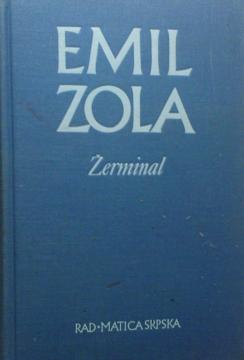

Žerminal

Žerminal

Émile Zola

In his best work, Germinal, Émile Zola realistically described the inhuman living and working conditions of miners in northern France in the 60s of the 19th century.

Germinal is a novel published in 1885, one of the most important in Zola's "Rougon-Macquart" cycle. The main character, Étienne Lantier, a young worker who lost his job due to his impetuous nature, comes to the mining settlement of Montsou and gets a job at the Voreux mine. There, he witnesses the brutal working conditions, injustice, and misery that plague the miners' families. Étienne becomes increasingly politically aware, embraces socialist ideas, and organizes a strike in an effort to get the workers better conditions and wages.

The strike, initially full of hope, soon develops into a struggle for bare survival. The government and the mining employers brutally suppress the rebellion, and the strikers and their families suffer hunger and death. The mine becomes a symbol of the relentless force that grinds the workers down. Despite the defeat, the novel ends with symbolic hope: Germinal - a month in the French revolutionary calendar that marks the awakening of nature - suggests that, like spring, workers' resistance will one day flourish again.

In "Germinal," Zola masterfully combines a naturalistic depiction of misery with strong emotion and social engagement. The work remains one of the most powerful depictions of social injustice in literature.

Naslov izvornika
Germinal
Prijevod
Dušan Matić
Urednik
Dušan Papadopolos
Naslovnica
Stevan Vujkov
Dimenzije
20 x 13 cm
Broj strana
510
Nakladnik
Rad, Beogard, 1974.
 
Tiraž: 20.000 primjeraka
 
Latinica. Tvrde korice.
Jezik: Srpski.

Nema primjeraka u ponudi

Poslednji primjerak je nedavno prodan.

 

Zanima Vas i neka druga knjiga? Možete pretražiti našu ponudu pomoću tražilice ili prelistati knjige po kategorijama.

Možda će Vas zanimati i ovi naslovi

Zver-čovek

Zver-čovek

Émile Zola

The novel explores the destructive forces of inheritance, passion, and violence in modern industrial society. The action takes place largely on the railroad, a symbol of speed, destiny, and inevitable doom. “Beast Man” is the first description of crime in

Nolit, 1940.
Srpski. Latinica. Broširano s ovitkom.
56,32
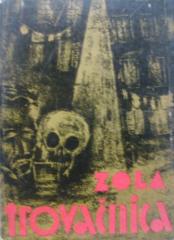
Trovačnica

Trovačnica

Émile Zola

The novel The Poisoner was published in sequels during 1876, and in book form in 1877. It is the story of a woman's struggle for happiness in the working class of Paris.

Rad, 1955.
Srpski. Latinica. Tvrde korice s ovitkom.
8,62 - 9,99
Stranica ljubavi

Stranica ljubavi

Émile Zola
Rad, 1974.
Srpski. Latinica. Tvrde korice.
5,84
Banco: Sve ili ništa

Banco: Sve ili ništa

Henri Charrière

In his book Banco – All or Nothing, Henri Charrière describes his life after escaping from prison in French Guiana. Seeking redemption, he embarks on an honest life, but through numerous adventures and shady dealings, he once again tests the limits of fre

Alfa, 1977.
Hrvatski. Latinica. Tvrde korice s ovitkom.
11,56
Baselska zvona

Baselska zvona

Louis Aragon

The novel follows three women: Diane, a noblewoman; Catherine Simonidzé, a feminist; and the real Clara Zetkin, a communist. Through their destinies, the crisis of bourgeois society, women's emancipation, and the path to communism are depicted.

Kultura, 1946.
Srpski. Latinica. Tvrde korice.
5,76
Zmijska kuća

Zmijska kuća

Miriam Delly

In The House of the Snake, M. Delly combines a love story with a suspenseful mystery about inheritance, betrayal, and redemption. In a dark castle filled with intrigue, the heroes discover that only faith and pure love can overcome evil.

Nakladni zavod Matice hrvatske, 1989.
Hrvatski. Latinica. Tvrde korice s ovitkom.
6,78