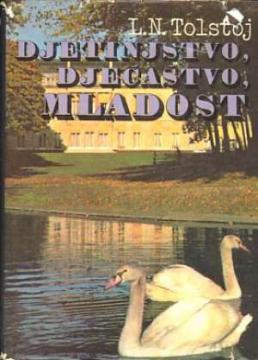
Djetinjstvo / Dječaštvo / Mladost
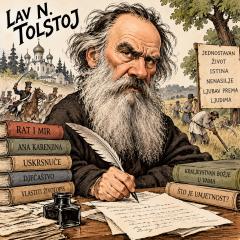
Leo Nikolayevich Tolstoy, in his autobiographical trilogy Childhood (1852), Boyhood (1854), and Youth (1857), follows the growing up of Nikolai Irtenyev, a young nobleman whose experience mirrors Tolstoy's own youth.
In Childhood, ten-year-old Nikolai experiences the world through the eyes of a child, enchanted by the beauty of his country estate and the warmth of his family. The death of his mother brings his first great sorrow, awakening his awareness of transience. His relationships with his teacher Karl Ivanovich and friends reveal his first lessons about love, loss, and social differences. In Boyhood, Nikolai faces adolescence**, a move to Moscow, and new challenges. He feels insecure, ponders religion and social norms, while struggling with internal conflicts and his first romantic longings. Youth follows Nikolai at university**, where he faces disappointments in his education, social ambitions, and moral dilemmas. He tries to find his place in the world, balancing between idealism and the vanity of aristocratic life. Through introspection, Nikolai realizes the importance of authenticity, laying the foundation for future spiritual quests.
The trilogy is Tolstoy's literary debut, which immediately established him as a great writer. Inspired by his own life, the works introduce his realistic style and psychological depth, which would later culminate in War and Peace and Anna Karenina. The focus on internal conflicts, moral questions, and social criticism foreshadowed the themes that would dominate his later works. Unlike later moralistic works such as Resurrection, the trilogy is intimate and devoid of didacticism, offering a universal coming-of-age story. These works demonstrate Tolstoy's ability to capture the subtleties of human emotion, laying the foundation for his status as a master of psychological realism.
The trilogy was received with enthusiasm in Russia, praising Tolstoy's freshness and sensitivity. Critics appreciated the realistic descriptions and emotional depth, although some later considered the works to pale in comparison to his epic novels. Today, the trilogy is considered a classic, treasured for its insight into Tolstoy's early development and the universality of the theme of coming-of-age.
Jedan primerak je u ponudi