Ilja Iljf

Ilya Ilf (Russian: Илья Ильф), born Ilya Arnoldovich Fainzilberg, was a Soviet writer, journalist, and satirist; he was born on October 15, 1897, in Odessa and died on April 13, 1937, in Moscow. He is best known for his literary collaboration with Yevgeny Petrov, with whom he created some of the most popular satirical works of 20th-century Russian literature.
After completing technical school, he held various jobs and began his literary career by writing poems, humorous pieces, and newspaper articles. In 1923, he moved to Moscow, where he took a job at the newspaper Gudok, known for its satirical content. There, he met numerous writers and developed a distinctive style characterized by wit, irony, and a critique of social absurdities.
A pivotal moment in his career was his collaboration with Yevgeny Petrov. Their first joint novel, The Twelve Chairs (1928), follows the adventures of the resourceful con man Ostap Bender as he searches for jewels hidden inside one of twelve chairs. The novel became a classic of Soviet humorous and satirical prose.
In the sequel, The Golden Calf (1931), Ostap Bender reappears as the protagonist of a grotesque tale about wealth, greed, bureaucracy, and the contradictions of Soviet society. Ilf and Petrov also wrote the satirical cycles Unusual Stories from the Life of the City of Kolokolamsk (1928) and One Thousand and One Days, or The New Scheherazade (1929).
Following their travels across the United States in 1935 and 1936, they published the travelogue One-Storied America (1937), in which they portray American society, everyday life, and culture through humor and keen observations.
Ilf was also an avid photographer. He died of tuberculosis at the age of 39.
His literary legacy is characterized by sharp satire, vivid characters, linguistic inventiveness, and a critique of human gullibility, corruption, and bureaucracy. Together with Petrov, he left an indelible mark on Russian literature, and their works continue to attract readers today with their wit and social relevance.
Naslovi u ponudi
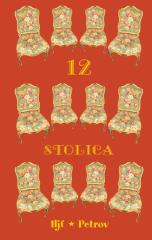
12 stolica
Satirična potraga za skrivenim blagom u postrevolucionarnoj Rusiji. Bivši plemić Ipolit Matvejevič Vorobjaninov i prevarant Ostap Bender jure za dragocenostima, razotkrivajući pohlepu i apsurde sovjetskog društva.
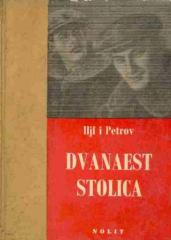
Dvanaest stolica
Die Hauptfigur des Romans ist der geniale Betrüger Ostap Bender, der diesmal in einem von zwölf in der gesamten Sowjetunion in die Luft gesprengten Polstersesseln nach Diamanten sucht.
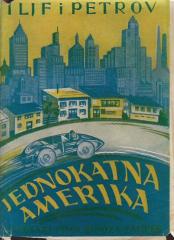
Jednokatna Amerika
Posle velikog uspeha Dvanaest stolica i Zlatnog teleta, Iljf i Petrov su putovali Sjedinjenim Državama tokom Velike depresije i svoja zapažanja pretočili u roman One-Stori America, nastavljajući da pišu u satiričnom stilu.
Kako se stvarao Robinson
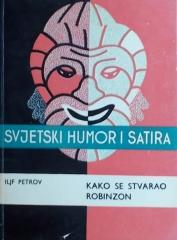
Kako se stvarao Robinzon
Delo prikazuje proces stvaranja književnog junaka i ismeva birokratiju, površnost i veštačko stvaranje „idealnih“ priča prema unapred određenim pravilima.
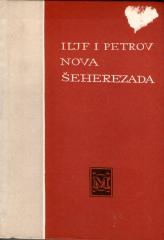
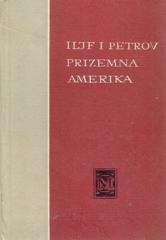
Prizemna Amerika
Krajem 1935. godine, poznati ruski pisački duo krenuo je na putovanje automobilom preko Sjedinjenih Država, gde su proveli ukupno tri i po meseca.
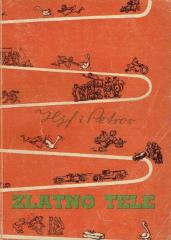
Zlatno tele
Das goldene Kalb (1931) ist ein brillantes satirisches Schelmenabenteuer, eine Fortsetzung des legendären Romans Die zwölf Stühle, in dem der große Intrigant Ostap Bender in voller Pracht zurückkehrt – charmant, zynisch, unverbesserlich gerissen und allen
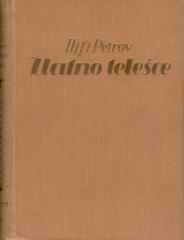
Zlatno telešce
Der Film „Das goldene Kalb“ (1931) erzählt die Geschichte des gerissenen Hochstaplers Ostap Bender, der im sowjetischen Russland während des ersten Fünfjahresplans einen geheimen Millionär sucht, um reich zu werden. Dabei stößt er auf die Absurdität der B